Dental Health
Dental Tourism in Madrid: Prices & What to Expect
Dental treatment in Madrid can cost 40–65% less than in the UK or Germany. Here's what to expect at Debod Dental Clinic — honest prices, the full process, and what international patients really ask.
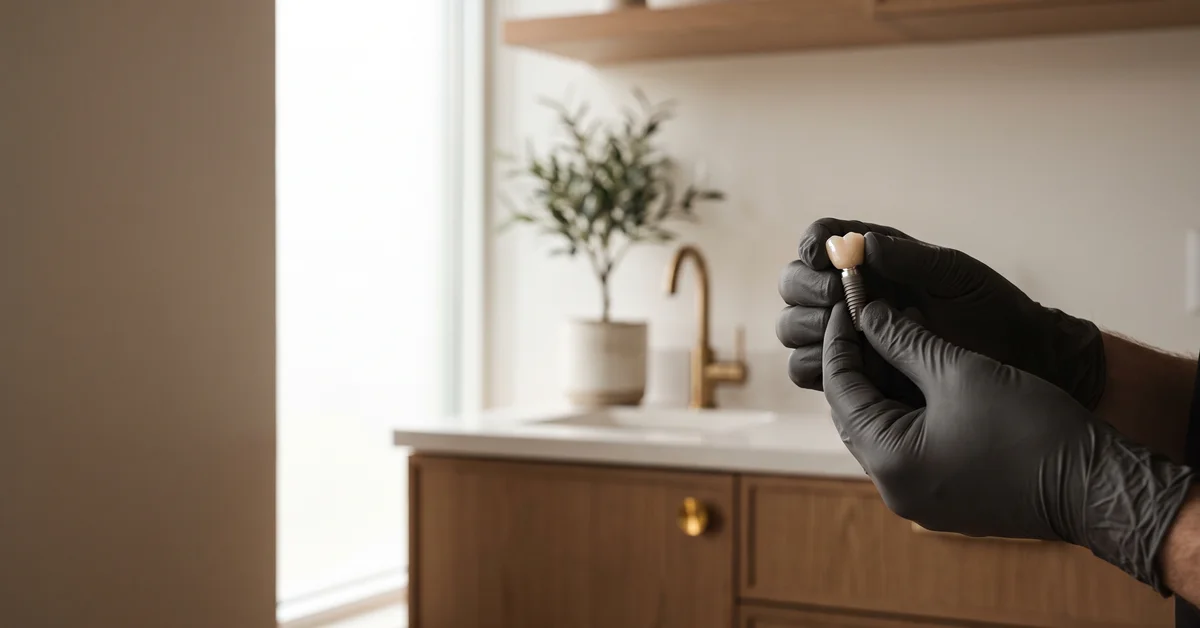
What Dental Treatment at Debod Dental Clinic Includes
Travelling to Madrid for dental care is a decision more and more patients from the UK, Germany, and the Netherlands are making — and for good reason. Debod Dental Clinic, on Calle Ferraz in the heart of Argüelles, offers full specialist care in English for international patients, with the same diagnostic rigour and quality standards you'd expect from a top private practice anywhere in Western Europe.
Every treatment starts with a complimentary diagnostic visit: a clinical examination, digital X-rays, and a 3D cone-beam CT scan where indicated, followed by a written treatment plan with no hidden costs. You know what you're getting, and what it costs, before anything begins.
How Much Does Dental Treatment Cost in Madrid? — Honest Prices
This is the first question every international patient asks. Rightly so.
Dental treatment in Madrid typically costs between 40% and 65% less than equivalent care in the UK or Germany. A single dental implant that might run to £2,000–£3,000 in London tends to fall in the €800–€1,400 range here, depending on the complexity of your case and whether any preparatory procedures are needed. Ceramic crowns generally sit between €350 and €600; porcelain veneers between €400 and €700 per tooth; a full course of Invisalign between €2,500 and €4,500.
These are honest orientation figures, not fixed quotes. The exact price for your specific case is confirmed after the first diagnostic visit — which is included at no charge — using a full 3D scan and intraoral assessment. But does saving this much mean you're getting something inferior? That's a fair question, and we'll come back to it when we describe the process.
We offer financing over up to 60 months, with 0% interest for the first 12 months and no deposit required. For most mid-to-high-complexity treatments, the total saving — even after flights and accommodation — is considerable.
How Do I Know if I'm the Right Candidate?
Most patients from Northern Europe who contact us are good candidates. But honest dentistry means telling you when you're not quite ready yet, too.
A few things to bear in mind before booking:
- Gums must be healthy — a healthy, coral-pink colour — before any restorative or cosmetic work can begin. We won't place veneers or implants on inflamed tissue.
- Active tooth decay must be treated before placing crowns, veneers, or implants on top of it.
- Osseointegration — the biological process by which a titanium implant fuses with the jawbone — takes 3 to 6 months. Dental implants genuinely require at least two visits to Madrid, spaced apart by that interval. Any clinic promising completed implants in a single trip is not being straight with you.
- If you have a significant bite problem — deep bite, crossbite, severe crowding — this should be assessed before extensive cosmetic treatment. Aesthetics built on an unstable bite don't last.
If you already have a panoramic X-ray (OPG), you're welcome to send it to info@deboddentalclinic.com before travelling. We can often give you a preliminary picture of what's involved before you book your flights.
The Process Step by Step at Debod
Back to that question about quality. Affordable prices in Madrid don't reflect lower standards — they reflect a different healthcare economy, lower operational costs, and no private insurance mark-ups. Spanish dental degrees run five years, with specialist postgraduate training and continuous professional regulation by the Ministry of Health. The materials are CE-marked, from the same brands used across Western Europe.
In our case, Dr. César Rodríguez — our specialist in Prosthodontics and Oral Rehabilitation, with a Master's degree from the Universidad Complutense de Madrid and a teaching post there — personally oversees all implant, crown, and veneer cases.
Here is what a typical patient journey looks like for an international visitor at Debod:
Visit 1 (2–4 days in Madrid): Complimentary diagnostic appointment, 3D CT scan and/or intraoral digital scan, written treatment plan, and — where possible — any preparatory procedures (extractions, gum treatment, temporary restorations) completed during the same stay.
Between visits: Remote follow-up in English by email or video call. All records are shared digitally.
Visit 2 (2–5 days in Madrid): Placement of final restorations — crowns, veneers, or implant-supported prostheses. All ceramic work is fabricated on-site at Debod Dental Lab, our in-house digital laboratory. No outsourcing, no delays, and full quality control at every stage.
For implant cases, Visit 2 typically happens 3–6 months after Visit 1. For crowns, veneers, and shorter aligner programmes, the timeline can be condensed considerably. And one question nearly every patient asks at this stage: what happens if a complication arises after I've gone home? We'll address that directly below.
Questions We're Always Asked Before Booking
Does dental treatment in Madrid hurt?
No more than it would in your home country. We use up-to-date local anaesthesia for any procedure that requires it, and we check you're comfortable at every stage. If you're anxious about dental treatment — many people are — let us know when you book. We adapt our pace and approach accordingly.
How long do I need to stay in Madrid per visit?
For an initial diagnostic visit plus any preparatory work, 2 to 4 days is typically sufficient. For more complex cases — multiple implants, full-arch rehabilitation — plan for 4 to 6 days per phase. We schedule appointments on consecutive days where possible to reduce time away from home. Madrid's Adolfo Suárez-Barajas Airport has direct connections from most major UK and Northern European cities, usually under 3 hours' flying time.
What happens if something goes wrong once I'm back home?
This is the most important question in dental tourism, and the one that separates honest clinics from careless ones. We provide full written documentation of every procedure — materials used, implant brands, aftercare instructions — and a direct English-language contact for remote follow-up. We track osseointegration remotely between visits and advise on anything that arises. All restorations and implant placements come with written guarantees; ask us for the specifics at your diagnostic appointment. We can also liaise with a dentist in your home country if needed.
Are the materials used in Spain the same quality as in the UK or Germany?
Yes. We use CE-marked dental materials throughout, including leading implant systems (Straumann, Nobel Biocare) and lithium disilicate ceramics (e.max) for crowns and veneers. Sterilisation is carried out with Class B autoclaves in line with Spanish Ministry of Health requirements — the same standard you'd find at any accredited clinic in the UK or Germany.
Is dental tourism in Madrid worth it for a routine check-up?
For a single check-up or a routine scale and polish, the saving alone is unlikely to justify the journey. Dental tourism makes clear financial sense for treatments costing €500 or more at home — implants, full-mouth rehabilitation, aligner therapy, multiple crowns or veneers. That's where the numbers add up, even after accounting for flights and a few nights in Madrid.
Why Choose Debod Dental Clinic in Argüelles?
We're a boutique clinic. Small enough that you'll see the same specialist at every appointment; well-equipped enough to handle complex cases without referring you elsewhere.
Debod Dental Lab — our in-house digital laboratory — is one of the things that genuinely sets us apart. Most clinics outsource ceramic work to external laboratories, which adds time, cost, and an extra layer of unpredictability. We don't. Every crown and veneer is fabricated on-site, by technicians who work directly alongside the treating dentist, with digital workflows at every step.
Our imaging includes intraoral digital scanning and 3D cone-beam CT — the same tools used in university hospital settings — which allow us to plan treatment with precision and show you the expected outcome before a single procedure begins.
We were awarded the WhiteSmile 2023 prize, but what we hear most from patients who return is that what brought them back was the straightforwardness: a clear diagnosis, a realistic plan, and no surprises on the invoice.
We're at C. de Ferraz, 24, Argüelles, 28008 Madrid, a short walk from Ventura Rodríguez metro station (Line 3), and easily reached from Plaza de España and Argüelles stations too. We're open Monday to Friday, 9:00–20:00, reachable at info@deboddentalclinic.com or +34 914 47 62 25.
The first diagnostic visit is complimentary — no commitment, no pressure. Just an honest assessment of your dental health and a clear plan. Book your visit and let us take it from there.
Frequently asked questions
Frequently asked questions about this topic.
No more than it would at home. We use up-to-date local anaesthesia for any procedure that requires it and check you're comfortable at every stage. If you're anxious about dental treatment, let us know when you book — we adapt our pace and approach accordingly.
For an initial diagnostic visit plus any preparatory work, 2 to 4 days is typically sufficient. For more complex cases (multiple implants, full-arch rehabilitation), plan for 4 to 6 days per phase. We schedule appointments on consecutive days where possible to reduce time away from home.
We provide full written documentation of every procedure — materials used, implant brands, aftercare instructions — and a direct English-language contact for remote follow-up. All restorations and implant placements come with written guarantees, and we can liaise with a dentist in your home country if needed.
Yes. We use CE-marked dental materials throughout, including leading implant systems (Straumann, Nobel Biocare) and lithium disilicate ceramics (e.max) for crowns and veneers. Sterilisation meets Spanish Ministry of Health requirements — the same standard as any accredited clinic in the UK or Germany.
For a single check-up or a routine scale and polish, the saving alone is unlikely to justify the journey. Dental tourism makes clear financial sense for treatments costing €500 or more at home — implants, full-mouth rehabilitation, aligner therapy, or multiple crowns and veneers. That is where the numbers genuinely add up, even after travel and accommodation.
Reviewed by Dr. César Rodríguez
Prostodoncia · Rehabilitación Oral · COEM Reg. No. 28015194
Last reviewed: 14 August 2026
Informational content reviewed by a registered professional at Debod Dental Clinic. It does not replace a personalised clinical assessment. View specialist profile.
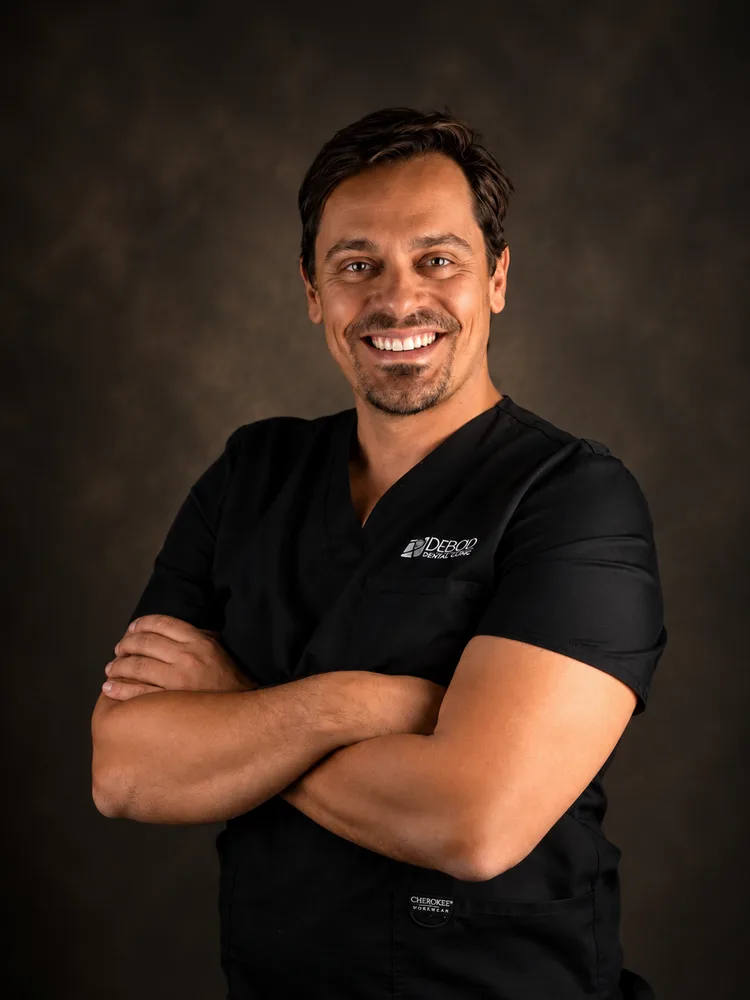
Author
Dr. César Rodríguez
Prosthodontics · Full Oral Rehabilitation
Dr. César Rodríguez is a distinguished prosthodontist with a Master's in Facial Prosthetics and Occlusion from the Complutense University of Madrid. Initially trained in Dentistry at the Central University of Venezuela, his credentials have…
Meet the teamRelated articles
Dental diagnosis in Argüelles, Madrid: the foundation of successful treatment
2 min read · Mar 2026
Oral cancer screening in Argüelles, Madrid: why it is so important
2 min read · Mar 2026
Root canal or extraction: how to know if your tooth can still be saved
4 min read · Jun 2026
Did this article raise questions?
Talk directly with our team of specialists. First consultation with no obligation.
Book a consultation