Dental Health
Dr. Víctor Guerrero: Invisible Orthodontics in Madrid
Dr. Víctor Guerrero at Debod Dental Clinic in Argüelles shares 15+ years of Invisalign® experience — who clear aligners really suit, honest timelines, and what most clinics leave unsaid.
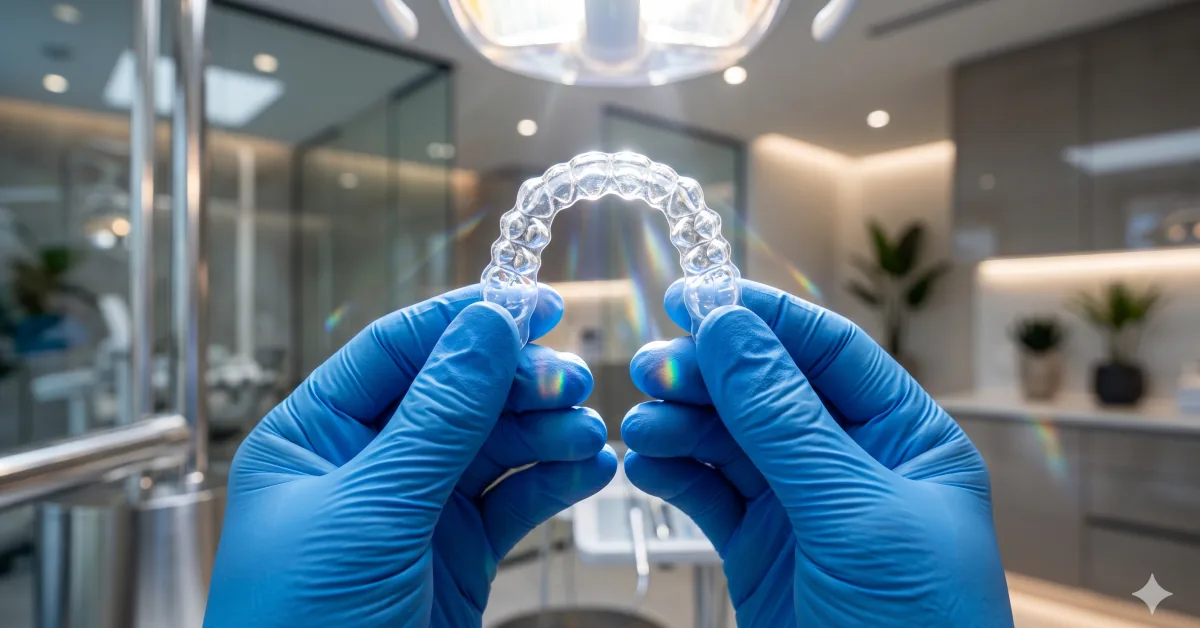
Dr. Víctor Guerrero's Perspective on Invisible Orthodontics
At Debod Dental Clinic in Argüelles, Madrid, one of the questions I hear most often in a first consultation is: "Is invisible orthodontics actually going to work for me?" It is a fair question — and one I am genuinely glad patients ask before committing to anything. After more than 15 years working in orthodontics and dentofacial orthopaedics, and having treated hundreds of cases with Invisalign® and other clear aligner systems, my honest answer is always the same: it depends on what we find when we look properly.
Clear aligners have changed the way we practise orthodontics. Not just aesthetically — though patients genuinely appreciate not spending 18 months with a mouth full of metal brackets — but clinically. The precision of digital planning today allows me to simulate the entire sequence of tooth movements before a single aligner is manufactured. What you see on screen at the start is what we are working towards. That kind of transparency sits at the heart of how we practice at Debod.
Not every crowding problem, however, can be solved with aligners alone. Some cases need a more sophisticated approach — and what we can achieve when aligners are combined with skeletal anchorage techniques goes well beyond what was possible even a decade ago. I will come back to exactly what that looks like in practice when we reach the clinical cases section below.
What Most Clinics Do Not Tell You About Invisible Orthodontics
There is a version of invisible orthodontics that gets marketed like a lifestyle product. Smooth animations, aspirational before-and-after photos, promises of a new smile in six months. Some of that is real — for the right cases. What tends to get left out, though, is the honest conversation about three things: compliance, biology, and case selection.
Aligners only work if worn for at least 22 hours per day. This is not a guideline — it is biology. Teeth move in response to sustained, consistent pressure. Remove the aligner for four hours a day and the treatment slows, sometimes to a near-standstill. I have seen cases planned for 14 months stretch to nearly two years because of irregular wear. That is not a failure of the technology. It is a failure of expectation-setting, which falls on the clinician.
The other thing rarely mentioned: some tooth movements are genuinely difficult with aligners alone. Pulling a tooth downward (extrusion), rotating certain premolars, managing complex bite discrepancies — these require small composite attachments bonded to the teeth, and in some cases, auxiliary mechanics or skeletal anchorage devices. None of this is a problem when planned from the start, but it changes the conversation considerably. The technology behind planning all of this has evolved enormously — and it is worth understanding what we actually use at Debod, which we will get to shortly.
One more point that matters for anyone with pre-existing gum concerns. Aligners are generally gentler on the gums than fixed braces. A 2024 European Journal of Orthodontics study found a 62% reduction in plaque indices during aligner treatment compared to fixed appliances. That said, gum health must be fully established before treatment begins. We do not start orthodontic cases on inflamed or compromised periodontium. Full stop.
Our Clinical Experience
Here are three anonymised cases that illustrate what invisible orthodontics can — and cannot — do.
A patient in her early 40s came to us after being told elsewhere that she would need fixed braces because of a mild open bite she had had since childhood. After a full digital assessment — intraoral scan, 3D cone beam CT, and ClinCheck simulation — we planned treatment using Invisalign® Comprehensive with posterior attachments and cortical mini-screws for skeletal anchorage to close the bite without surgery. Eighteen months later, the open bite was fully resolved and the crowding corrected. Her compliance was excellent throughout, and that made every difference.
A second case: a man in his mid-30s who travelled frequently for work. Fixed braces were not compatible with his professional life — the discomfort, dietary restrictions, and aesthetic impact in client meetings were genuine barriers. We treated him with Invisalign®, with remote monitoring between in-person visits at our Argüelles practice. Treatment took 16 months. He described it as one of the most straightforward health decisions he had made in years. That is not unusual — removable orthodontics integrates into adult life in a way that fixed appliances simply cannot.
A third case worth mentioning: a teenager referred to us by a paediatric dentist. She had significant upper arch crowding, but her jaw was still growing — which opened up options not available to an adult. We combined a palatal expansion phase with Invisalign® Teen clear aligners to guide development. The interceptive approach meant avoiding extractions that would almost certainly have been required had she waited. If you are wondering whether your child might benefit from an orthodontic assessment, the short answer is: earlier is nearly always better than later.
Frequently Asked Questions About Invisible Orthodontics
Does invisible orthodontics hurt?
Discomfort, yes. Genuine pain, rarely. At each aligner change — typically every one to two weeks — most patients describe a feeling of pressure for the first 24 to 48 hours. Think of it as similar to the sensation after a demanding workout: you are aware something has happened, and then it fades. Paracetamol or ibuprofen handles it comfortably for those who find it bothersome. This is considerably milder than what patients typically describe after wire tightening on fixed braces.
How long does treatment take?
It varies — and that is the honest answer. Mild cases (minor crowding, small spacing gaps) can often be corrected in six to ten months. Moderate cases typically run 12 to 18 months. Complex cases, particularly those combining aligners with skeletal anchorage mechanics, may take 18 to 24 months. What we show you in the ClinCheck simulation at the outset is our target, based on the biology of your specific teeth and bone. We set clear expectations from day one, not optimistic ones.
What happens if I do not wear my aligners enough?
Treatment slows, or in some cases stalls entirely. If there is a significant gap between where your teeth are and where the aligner expects them to be, the tray will not seat correctly — and movement stops. We monitor this at every review visit and would always rather have a frank conversation early than discover a compliance problem six months in.
Can aligners fix my bite, or only the aesthetics?
Both, in many cases. Crowding, spacing, rotations, crossbites, deep bites, and open bites can all be addressed. What aligners cannot do is correct a true skeletal jaw discrepancy — a structural difference in the jaw bones themselves. That requires either orthodontic compensation, orthopaedic treatment during growth, or orthognathic surgery in adults. One of the first things I establish at a diagnostic assessment is which category your case belongs to, because getting that wrong wastes everyone's time and money.
Is the result permanent?
No orthodontic result — with any system — is permanent without retention. Teeth have a positional memory and will drift back if unsupported. At Debod, once active treatment is complete, we fit a fixed lingual retainer (a fine wire bonded to the inside surface of the teeth, invisible from outside) and provide a removable night-time retainer. Worn consistently, the result is stable long-term. We are transparent about this from the very first visit, not at the end.
How do I know if I am a good candidate?
The only reliable answer comes from a proper assessment — not from a website, not from a photo taken on your phone. A clinical examination, intraoral scan, and where appropriate a 3D CT give us the full picture. Is it normal to be unsure whether aligners apply to your case? Absolutely. That uncertainty is exactly what a diagnostic visit is for. Yours at Debod is included, with no obligation.
What Technology Do We Use at Debod for Invisible Orthodontics?
Digital planning is at the heart of how we treat orthodontic cases at Debod Dental Clinic. Here is what that looks like in practice.
Every patient starts with an intraoral 3D scan — no impression trays, no gagging, no mess. The scanner maps the precise geometry of your teeth and bite in minutes, with an accuracy under 0.1 mm. From that data, we build the ClinCheck simulation: a virtual model of your treatment, tooth movement by tooth movement, from start to finish. You see the projected outcome before we order a single aligner. There are no surprises mid-treatment about the direction the teeth are heading — you approve the plan at the beginning.
Where there are bite discrepancies, root positioning concerns, or the possibility of skeletal anchorage, we add a CBCT (Cone Beam CT) 3D scan — a low-dose X-ray that shows bone structure, root lengths, and anatomical detail a standard scan cannot capture. This is how we plan confidently rather than optimistically. It is also how we avoid the situations where a case gets started, then stalls because something was missed in the initial workup.
Our in-house digital laboratory, Debod Dental Lab, handles the restorative and retentive elements of orthodontic care with the same precision applied to the treatment planning itself. Custom retainers, composite attachments, any complementary restorative work — all produced in-house, which keeps quality control entirely within our hands and means there is no disconnect between your orthodontic and restorative care.
If you are considering invisible orthodontics in Madrid and would like a thorough, honest assessment — or if you already have a ClinCheck plan from another clinic and want a second opinion before committing — we are happy to review everything at your first diagnostic visit. You can also explore all treatments available at Debod if you have other dental questions beyond orthodontics. Find us at C. de Ferraz, 24, Argüelles, Madrid, a short walk from Ventura Rodríguez, Plaza de España, and Argüelles metro stations. We are open Monday to Friday, 9:00 to 20:00. Financing is available up to 60 months, with 0% interest for the first 12. Book your first visit here — the diagnostic consultation is included.
Frequently asked questions
Frequently asked questions about this topic.
Discomfort is normal at each aligner change — most patients describe a feeling of pressure for the first 24 to 48 hours. It is considerably milder than wire tightening with fixed braces, and paracetamol or ibuprofen handles it comfortably when needed.
Mild cases can often be resolved in six to ten months. Moderate cases typically run 12 to 18 months. Complex cases combining aligners with skeletal anchorage may take 18 to 24 months. The ClinCheck simulation shown at the first visit sets a realistic target timeline based on your specific case.
Treatment slows or stalls entirely. Aligners only move teeth through sustained, consistent pressure — a minimum of 22 hours per day. If your teeth fall behind where the tray expects them to be, the next aligner will not seat correctly and movement stops. We monitor this at every review visit.
Both are possible in many cases. Crowding, spacing, rotations, crossbites, deep bites, and open bites can all be addressed with aligners — sometimes with the help of attachments or mini-screws. True skeletal jaw discrepancies require a different approach, which is why a full diagnostic assessment is always the starting point.
No orthodontic result is permanent without retention. At Debod we fit a fixed lingual retainer and a removable night-time retainer once active treatment is complete. Worn consistently, the result holds long-term. We are straightforward about this requirement from the very first appointment.
The only reliable answer comes from a proper assessment — intraoral scan, clinical examination, and where needed, a 3D CT. Aligners suit mild to moderate crowding, spacing, and many bite issues well. Very low patient compliance or severe skeletal discrepancies tend to need a different approach. Your first diagnostic visit at Debod is included at no charge.
Reviewed by Dr. Víctor Guerrero
Ortodoncia · Ortopedia Dentofacial · COEM Reg. No. 28013382
Last reviewed: 7 August 2026
Informational content reviewed by a registered professional at Debod Dental Clinic. It does not replace a personalised clinical assessment. View specialist profile.
Author
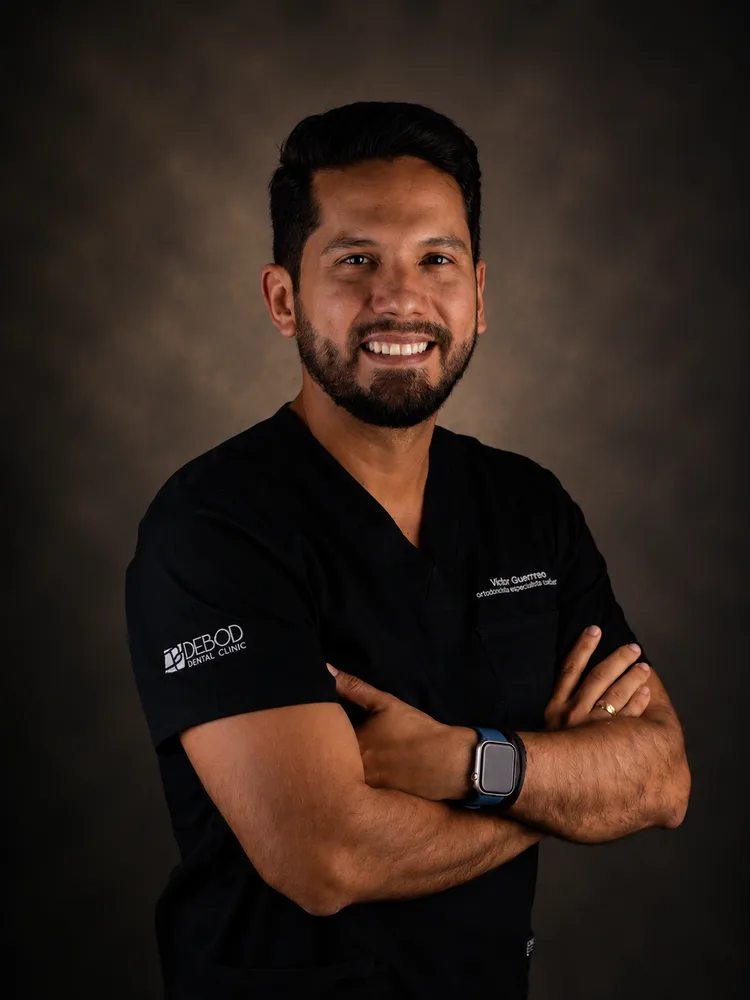
Dr. Víctor Guerrero
Orthodontics · Dentofacial Orthopaedics
Dr. Víctor Guerrero is a leading specialist in orthodontics and dentofacial orthopaedics, recognised for his contributions to the fields of invisible orthodontics and skeletal anchorage. A graduate with honours in Dentistry and Orthodontics…
Meet the teamRelated articles
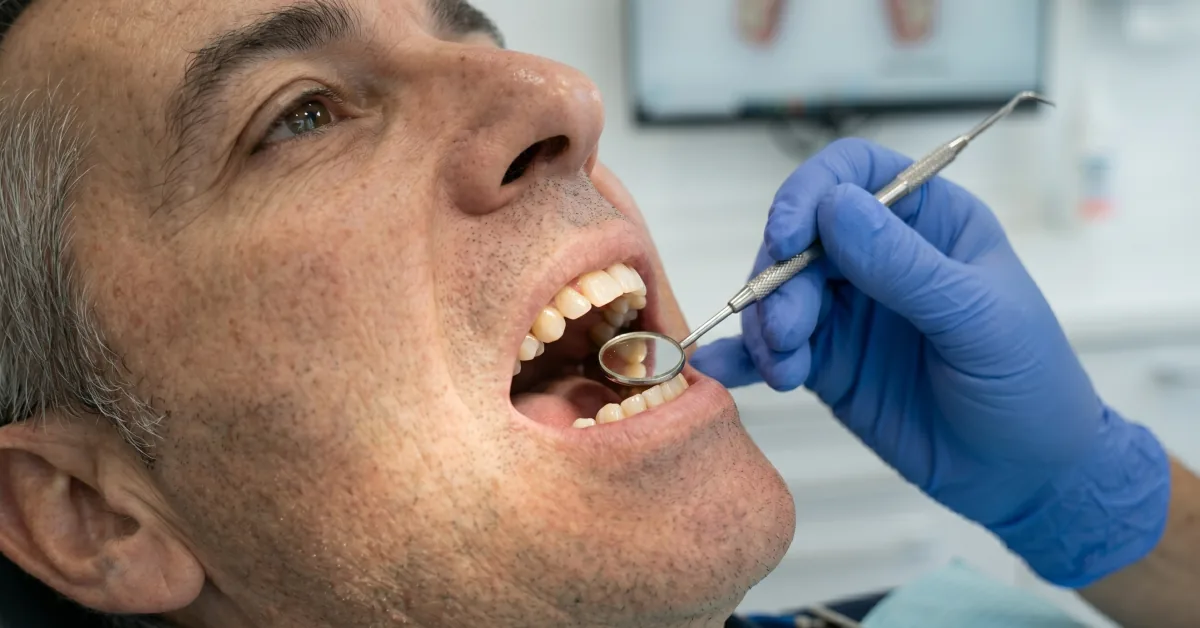
Dental diagnosis in Argüelles, Madrid: the foundation of successful treatment
2 min read · Mar 2026
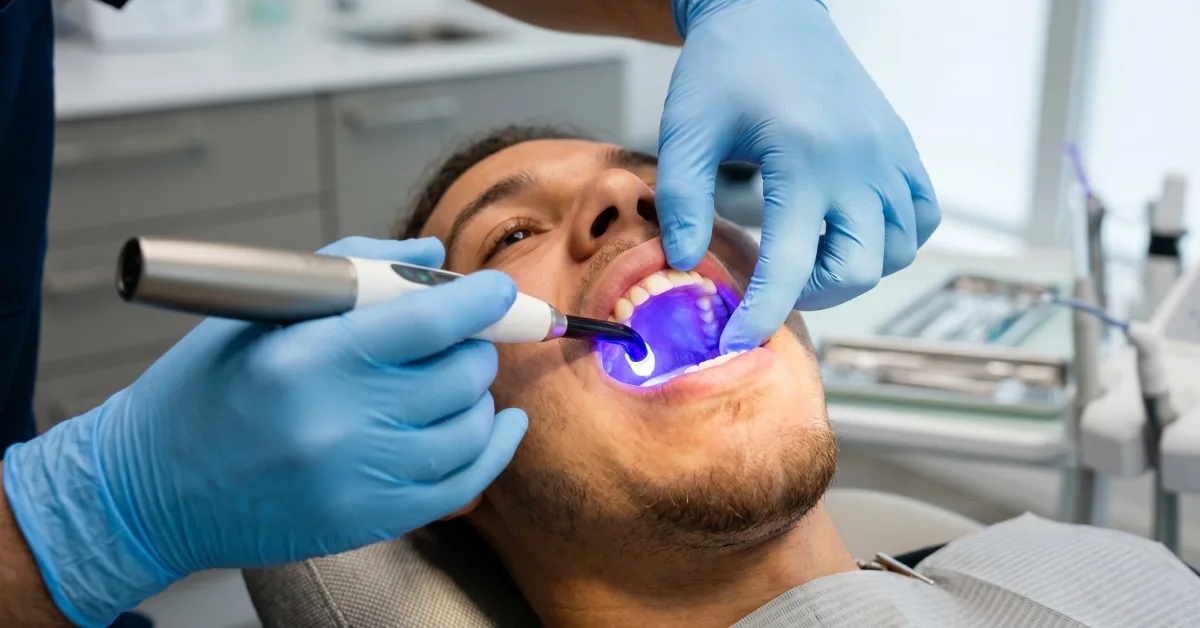
Oral cancer screening in Argüelles, Madrid: why it is so important
2 min read · Mar 2026
Root canal or extraction: how to know if your tooth can still be saved
4 min read · Jun 2026
Did this article raise questions?
Talk directly with our team of specialists. First consultation with no obligation.
Book a consultation