Services
Interest-Free Dental Implant Finance Madrid
Considering dental implants in Madrid? Understand interest-free finance, what your plan should include, and the questions to ask before signing.
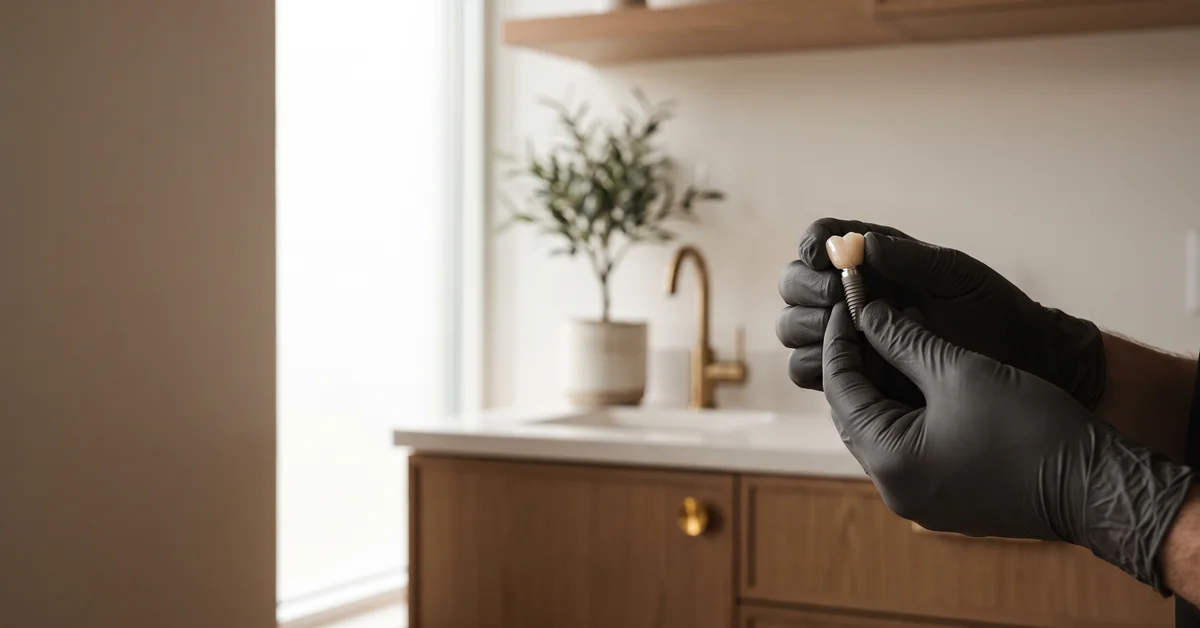
What does dental implant finance include at Debod Dental Clinic?
At Debod Dental Clinic in Argüelles, Madrid, dental implant finance is designed to let you consider treatment with a clear payment plan rather than making a rushed decision based on one large upfront cost. The first diagnostic appointment is included, so the team can examine the tooth, gums and bite before confirming whether an implant is suitable.
An implant is not simply a replacement tooth. It is a titanium fixture placed in the jawbone, followed by the visible restoration: often a crown, bridge or full prosthesis. That distinction matters when comparing finance offers. A low monthly payment may look appealing, but it only makes sense if you know exactly what treatment it covers.
There is a detail many people discover too late: the quote should separate each stage of care. We will come back to the practical questions that help you compare plans properly.
How much does dental implant treatment cost in Madrid? — Honest prices
The cost of dental implant treatment in Madrid varies considerably because no two mouths are alike. A straightforward single-tooth replacement is different from a case needing gum treatment, bone regeneration, a sinus lift, several implants or a full-arch prosthesis. For that reason, it would not be honest to give one fixed price without an examination.
At Debod Dental Clinic, the exact estimate is confirmed after the included first diagnostic visit and, where needed, digital planning with an intraoral scan and a 3D CT scan. This allows the clinician to assess bone volume, nearby anatomical structures and the final tooth position before treatment is planned.
Financing is available for up to 60 months, with 0% interest for the first 12 months and no deposit. Before accepting any finance agreement, ask for the written European consumer-credit information and check the TIN, APR, monthly instalment, term, total amount payable, possible fees, insurance and what happens if a payment is missed. “Interest-free” should be read carefully: a 0% nominal interest rate does not by itself rule out other charges.
The written treatment estimate should also make clear whether it includes:
- the surgical implant and the connector that joins it to the restoration;
- the final crown, bridge or removable prosthesis;
- scans, grafting, sedation where indicated and follow-up visits;
- maintenance appointments and the likely cost of future repairs.
What happens if a quote leaves out the crown or grafting? The initial figure can be misleading. Asking these questions early is not awkward; it is sensible healthcare.
How do I know if I am an ideal candidate?
A good candidate has a missing tooth, or teeth, and wants to explore a fixed or more stable replacement after a clinical assessment. Healthy and stable gums, effective daily cleaning and enough bone in the intended area all support predictable planning. If bone is limited, there may still be options, but these need proper assessment rather than assumptions.
Gum health comes first. Active gum disease can affect the tissues around implants and, over time, contribute to inflammation and bone loss around them. People with a history of periodontitis, poor plaque control or smoking may have a higher risk of complications, so these factors should be discussed openly. Treating and stabilising gum disease before implant surgery is often the right order.
An implant is not always the best answer. A tooth with a reasonable prognosis may be worth preserving. In some situations, a bridge supported by natural teeth or a conventional removable denture may be a valid alternative. The aim is not to sell the most elaborate option; it is to choose a solution that fits your oral health, expectations and budget.
Is it normal to need a scan before deciding? Yes. An X-ray and, frequently, 3D imaging help determine whether implant placement is appropriate and whether procedures such as bone regeneration could be needed. It is like checking the foundations before planning an extension to a house.
The step-by-step process at Debod
The process begins with the included diagnostic visit. The team reviews your medical and dental history, examines your gums and remaining teeth, and discusses what you would like to improve. Digital scans and 3D imaging are used when clinically appropriate to create a plan that is specific to you.
If decay, infection or gum disease is present, this is addressed first. Where a tooth cannot be saved, extraction may be planned before or alongside the implant pathway. If you have been considering dental implants in Argüelles, this assessment is the point where the options become clearer.
The implant placement itself is a surgical procedure, normally carried out under local anaesthetic. Guided planning may be appropriate in selected cases; you can read more about guided implant surgery. The implant then needs time to integrate with the bone. This is called osseointegration: the bone gradually bonds with the implant, rather like a fixing becoming secure within a wall.
How long does it take before the final tooth is fitted? It depends on healing, implant stability, the position of the tooth and whether grafting was required. Immediate teeth can be suitable in carefully selected cases, but should never be presented as a universal shortcut. A temporary tooth may sometimes be used while healing takes place.
Once the implant is ready, the final restoration is designed and made with the support of Debod Dental Lab, the clinic’s in-house digital laboratory. The objective is a tooth that functions comfortably and sits naturally within your smile, not one that looks unnaturally uniform. For a single missing tooth, this frequently means a carefully planned dental crown.
Before treatment begins, you receive a personalised plan and written estimate. That is the moment to review the clinical sequence and finance terms together, with no surprises.
Questions we are always asked before booking an appointment
Does implant treatment hurt?
Implant surgery is carried out with local anaesthetic, so you should not feel pain during the procedure. Afterwards, tenderness, swelling or bruising can happen and are usually temporary. Your clinician will explain the recovery expected for your case and how to manage it safely.
How long does dental implant treatment take?
There is no honest one-size-fits-all timetable. Healing can take months, particularly after grafting or when the implant needs time to integrate before the final restoration. Some carefully assessed cases follow a faster pathway, but speed should not override stability and safety.
Will the result last?
Implants can be a long-term solution, but they are not maintenance-free. Daily brushing, cleaning between teeth, regular reviews and professional cleaning are all part of protecting the gums and bone around an implant. Smoking, untreated gum disease and missed maintenance can increase the likelihood of complications.
Is there a guarantee on a dental implant?
Terms differ between treatments, components and clinical circumstances, so this should be discussed before you commit. Ask for the written details of what is covered, for how long, what maintenance is expected and what exclusions apply. A guarantee should never replace careful planning or ongoing care.
Is it worth choosing interest-free finance?
It can be helpful if spreading the cost makes a clinically suitable treatment manageable. Compare the total amount payable, not only the monthly figure, and do not choose a treatment solely because its instalment looks lower. The best decision joins a realistic budget with a treatment plan that protects your oral health.
What happens if I need bone grafting?
A graft may be recommended when there is not enough bone in the planned area for stable implant placement. It can change the length and cost of treatment, which is why 3D planning before a final quotation is so useful. The clinician will explain whether it is needed and whether alternatives exist.
Why choose Debod Dental Clinic in Argüelles?
Debod Dental Clinic offers a calm, transparent route for patients considering dental implants in Madrid. The practice is located at C. de Ferraz, 24, Argüelles, 28008 Madrid, close to Ventura Rodríguez on Line 3 and also accessible from Plaza de España and Argüelles.
Treatment planning combines digital intraoral scanning and 3D imaging where appropriate, with the work of Debod Dental Lab, the clinic’s in-house digital laboratory. This keeps the surgical and restorative stages connected from the first plan to the final tooth. Implant treatment is led by Dr César Rodríguez, whose clinical focus includes prosthodontics and oral rehabilitation.
The included first diagnostic visit is a chance to ask every question: whether an implant is right for you, what alternatives you have, what the written estimate includes and how financing would work in your circumstances. You can book an appointment or contact Debod Dental Clinic on +34 914 47 62 25, Monday to Friday, 9:00–20:00.
A missing tooth deserves a considered decision. With a clear diagnosis, transparent finance terms and a plan built around your mouth rather than a sales promise, you can move forward with more confidence.
Frequently asked questions
Frequently asked questions about this topic.
At Debod Dental Clinic, financing is available for up to 60 months, with 0% interest for the first 12 months and no deposit. Eligibility and the final finance agreement are confirmed individually.
Ask to see the TIN, APR, any opening fee, insurance, total amount payable, monthly instalment and term in writing. A 0% TIN does not automatically mean there are no other charges.
It depends on the treatment plan. Your written estimate should clearly state whether it includes the implant, abutment, crown or prosthesis, scans, grafting, reviews and any other planned care.
Timing depends on healing, bone volume, gum health and the type of restoration required. Some selected cases may be suitable for immediate loading, but it is not appropriate for everyone.
The procedure is planned with local anaesthetic. Mild discomfort and swelling afterwards can occur and are usually temporary. The clinician will explain the expected recovery for your individual case.
Reviewed by Dr. César Rodríguez
Prostodoncia · Rehabilitación Oral · COEM Reg. No. 28015194
Last reviewed: 23 November 2026
Informational content reviewed by a registered professional at Debod Dental Clinic. It does not replace a personalised clinical assessment. View specialist profile.
Author
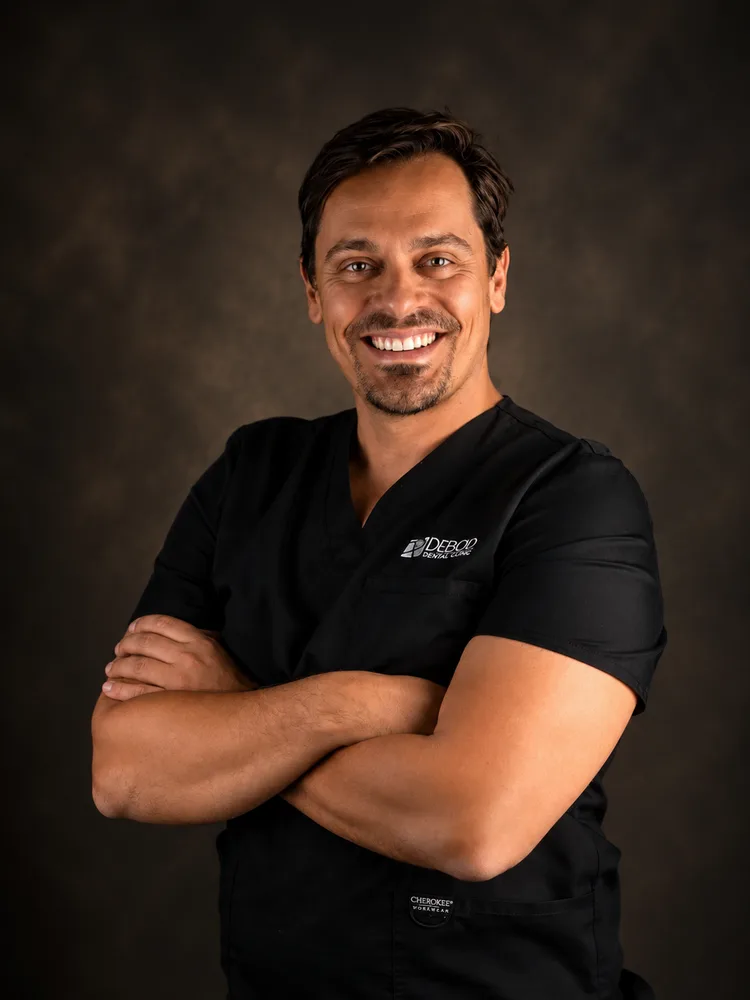
Dr. César Rodríguez
Prosthodontics · Full Oral Rehabilitation
Dr. César Rodríguez is a distinguished prosthodontist with a Master's in Facial Prosthetics and Occlusion from the Complutense University of Madrid. Initially trained in Dentistry at the Central University of Venezuela, his credentials have…
Meet the teamRelated articles
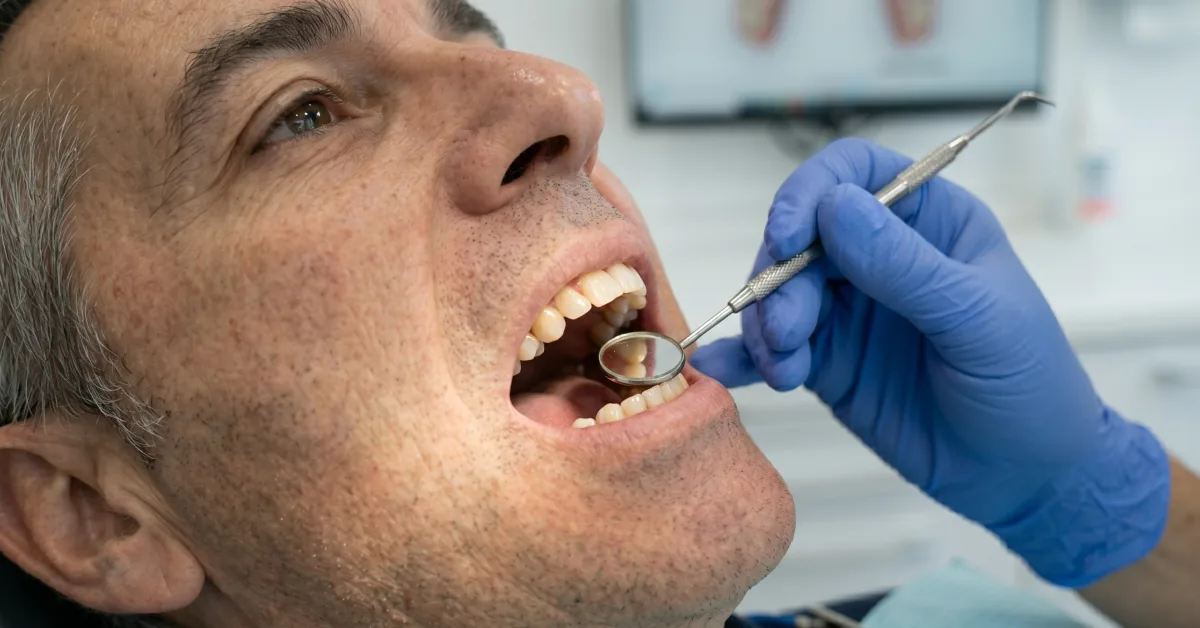
Dental diagnosis in Argüelles, Madrid: the foundation of successful treatment
2 min read · Mar 2026
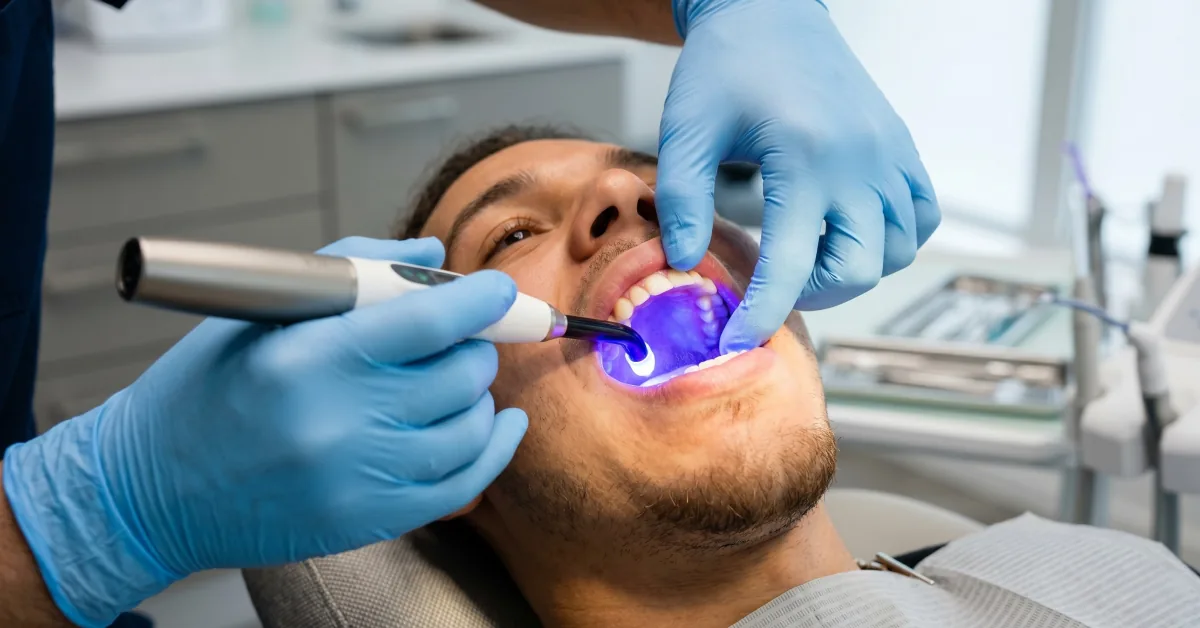
Oral cancer screening in Argüelles, Madrid: why it is so important
2 min read · Mar 2026
Root canal or extraction: how to know if your tooth can still be saved
4 min read · Jun 2026
Did this article raise questions?
Talk directly with our team of specialists. First consultation with no obligation.
Book a consultation