Cosmetic Dentistry
Invisible orthodontics: myths and real results
Invisible orthodontics has become very popular, but so have many myths. Is it as effective as braces? Does it work for complex cases? We debunk the myths.
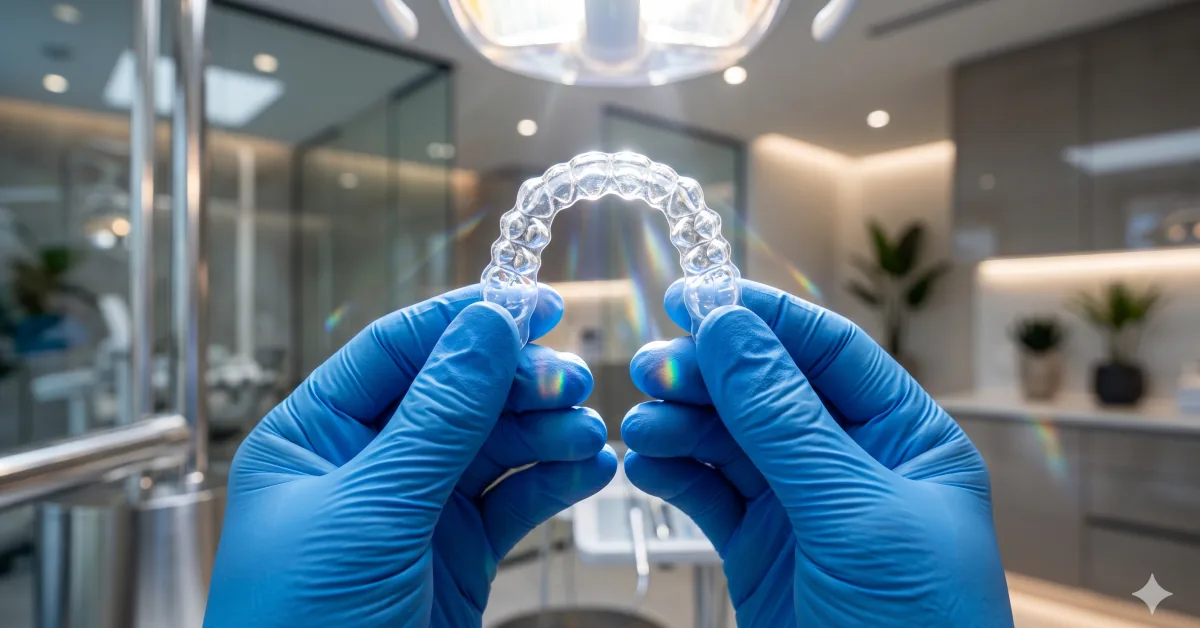
Orthodontics with clear aligners —especially Invisalign®— has transformed the way millions of people experience orthodontic treatment. But with its popularity have also come myths and misunderstandings worth clearing up.
Myth 1: "Invisible orthodontics is only for simple cases"
FALSE. In recent years, aligner systems have improved dramatically. Today, Invisalign® can treat the vast majority of orthodontic cases, including:
- Moderate and severe crowding
- Large diastemas (gaps)
- Crossbites
- Open and deep bites
- Cases that previously could only be treated with fixed braces
The key lies in the specialist's experience and in treatment planning. A good orthodontist knows when aligners are the best option and when braces offer greater control.
Myth 2: "The results are worse than with braces"
FALSE for most cases. When the case is well indicated and the patient is cooperative, the results of invisible orthodontics are equivalent to or better than those of conventional braces.
The most important factor in the outcome is not the system, but the specialist's experience and the patient's cooperation (the aligners must be worn at least 22 hours a day).
Myth 3: "Invisible orthodontics is only for adults"
FALSE. There is Invisalign Teen, specifically designed for teenagers. It includes wear indicators (to check they are being worn correctly) and replacement aligners.
Myth 4: "With aligners you don't have to wear retainers afterwards"
FALSE and dangerous. After any orthodontic treatment —with braces or with aligners— it is essential to wear retainers. Without retainers, the teeth will tend to return to their original position.
Myth 5: "Invisible orthodontics is much more expensive than braces"
IT DEPENDS. The price varies according to the complexity of the case and the practice where it is carried out. For simple cases, the difference can be minimal. For complex cases, aligner treatment can be similar or even just as affordable, considering the smaller number of visits.
What is true
- It requires more discipline from the patient (wearing the aligners for the prescribed hours).
- It makes oral hygiene easier during treatment.
- It is more aesthetic: virtually invisible.
- There are fewer emergency visits for broken brackets.
- Comfort during treatment is greater.
At Debod Dental Clinic, we are specialists in invisible orthodontics. We carry out a complete diagnosis and tell you honestly whether you are a good candidate for Invisalign® or whether another alternative suits your case better.
Frequently asked questions
Frequently asked questions about this topic.
Yes. Today’s aligners treat the vast majority of cases, including severe crowding, large diastemas and crossbites or open bites. The key lies in the orthodontist’s experience and good planning.
At least 22 hours a day, removing them only to eat and for hygiene. Patient cooperation is the factor that most influences the result.
Yes, it is essential. After any orthodontic treatment —with aligners or with braces— you must use retainers so the teeth do not return to their original position.
Reviewed by Dr. Víctor Guerrero
Ortodoncia · Ortopedia Dentofacial · COEM Reg. No. 28013382
Last reviewed: 1 March 2026
Informational content reviewed by a registered professional at Debod Dental Clinic. It does not replace a personalised clinical assessment. View specialist profile.

Author
Dr. Víctor Guerrero
Orthodontics · Dentofacial Orthopaedics
Dr. Víctor Guerrero is a leading specialist in orthodontics and dentofacial orthopaedics, recognised for his contributions to the fields of invisible orthodontics and skeletal anchorage. A graduate with honours in Dentistry and Orthodontics…
Meet the team
Did this article raise questions?
Talk directly with our team of specialists. First consultation with no obligation.
Book a consultation