Dental Health
Bruxism: Causes, Symptoms and Treatment
Clenching or grinding your teeth can cause lasting damage — often without you ever noticing. Here is what bruxism is, why it happens, and what to do about it.
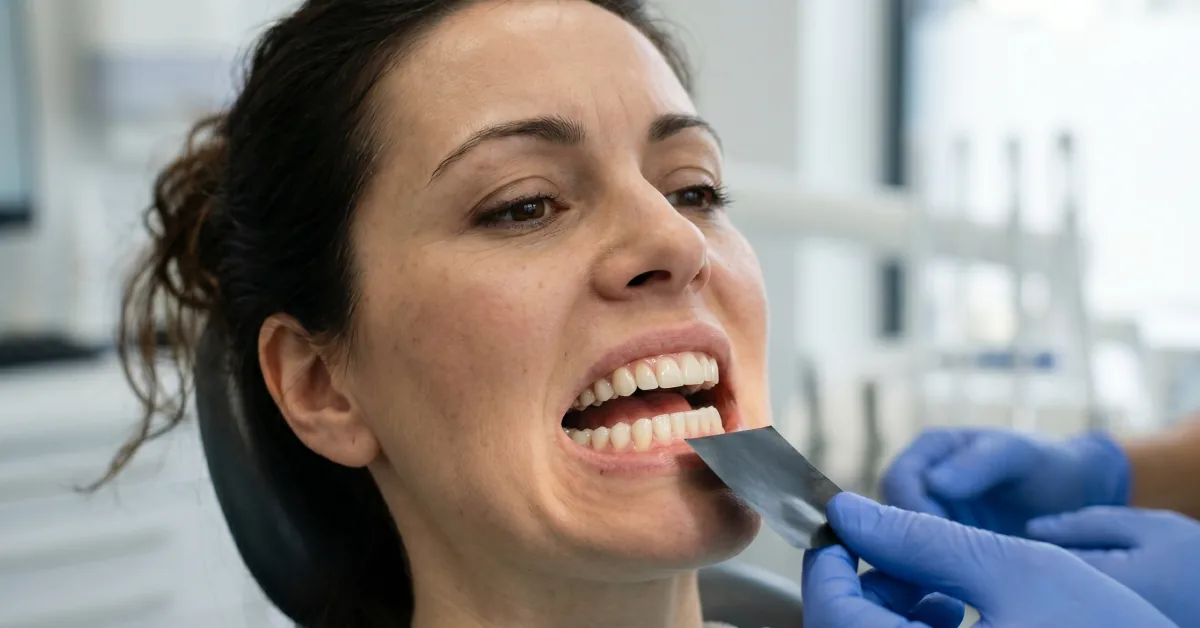
What Is Bruxism? — The Direct Answer
Bruxism is the involuntary habit of clenching or grinding your teeth — and at Debod Dental Clinic in Argüelles, Madrid, it is one of the most consistently underdiagnosed conditions we encounter. That is largely because the most common form occurs at night, during sleep, where it goes undetected until someone else points it out.
There are two distinct types: sleep bruxism, which happens during the night, and awake bruxism, where the jaw clenches during the day — usually as an unconscious response to stress, concentration, or anxiety. Both are treatable. What surprises many patients, though, is how easy the early signs are to dismiss as something else entirely.
Why Does This Matter for Your Dental Health?
Think of tooth enamel like the glaze on a ceramic tile. Once it wears away, it does not come back. The forces generated during bruxism can be two to ten times greater than those produced by normal chewing — applied for hours, night after night, without the natural rest that waking activity allows.
The consequences go well beyond worn enamel. Patients with untreated bruxism regularly present with cracked or chipped teeth, fractured fillings, heightened sensitivity to temperature, jaw stiffness that radiates up into the temples and down into the neck, and morning headaches that closely resemble tension migraines. Many attribute these symptoms to stress or poor sleep — which is not entirely wrong, but it misses the mechanism.
Is it normal that your jaw aches when you wake up? Common, yes. Normal, no. What actually causes this — and why some people develop it whilst others under the same stress do not — is more nuanced than most people expect.
What Causes Bruxism?
Bruxism is what clinicians call a multifactorial condition. Several things tend to combine, and there is rarely a single trigger.
Stress and anxiety are the most widely recognised drivers. When the nervous system is running at sustained high alert, many people carry that tension in the muscles of the jaw without ever realising it. Over time the pattern becomes habitual — persisting even when the stressor is no longer present.
Sleep disorders, particularly obstructive sleep apnoea, are closely linked to nocturnal grinding. So is caffeine, especially when consumed in the afternoon or evening. Certain medications — some antidepressants and stimulants among them — can also increase bruxism activity as a side effect.
Then there is the bite. A misaligned or irregular bite forces certain muscle groups to work harder than they should, establishing a grinding pattern that can outlast the original cause. This is why, in my experience, a thorough occlusal assessment is always part of evaluating any bruxism case — looking only at the symptoms without examining the bite is like treating a persistent limp without examining the knee.
Genetics appear to play a role as well. If bruxism runs in your family, you are statistically more likely to develop it. Whether any of this is reversible, and how much structural work may already be needed, depends on how early we catch it — which is precisely what a first diagnostic assessment is designed to establish.
Frequently Asked Questions
Does bruxism hurt?
Not always — at least not initially. Many patients only notice jaw stiffness or a dull ache on waking, which they put down to poor sleep. Over time, muscle fatigue becomes more consistent, and as enamel wears down or cracks develop, sensitivity and sharper pain follow. A fractured filling or a crack that extends deeper into the tooth can become acutely painful quite quickly — and that is usually when people seek help urgently.
How much does bruxism treatment cost?
The honest answer is that it depends entirely on the severity and on what treatment is needed. A custom-fitted night guard is typically the first step. If there is significant structural damage — teeth that need rebuilding with crowns or other restorations — the cost reflects the scope of that work.
At Debod Dental Clinic, pricing is always confirmed after a full diagnostic assessment. We will not give a figure without properly examining the situation first. That is not a policy position — it is simply the only honest way to do it.
How long does treatment take?
A custom night guard can typically be fitted across two appointments once a digital intraoral scan has been taken. If an underlying bite issue needs correcting, the timeline extends accordingly. Restorative cases are planned individually — some take several months — and your dentist will give you a realistic timeframe at the end of your first visit.
Is bruxism urgent?
It is not a dental emergency in the way an abscess is. However, enamel loss is cumulative and permanent. Every month of unchecked grinding means more structure gone that cannot be recovered. If you are regularly waking up with jaw pain or headaches, or a partner has mentioned grinding sounds at night, book an assessment rather than waiting to see if it settles on its own.
Can bruxism be resolved completely?
In many cases, yes — particularly when the underlying cause is identified and treated. Stress management, bite correction, or addressing a sleep disorder can significantly reduce or eliminate grinding altogether. For some patients it becomes a condition to manage long-term rather than cure outright, but both symptoms and further damage improve considerably once the right approach is in place.
How do I know if I have bruxism?
The most common signs are waking with a sore jaw or headache, teeth that appear flatter or shorter than they used to, increased sensitivity, and a partner reporting grinding sounds during the night. It can also be detected at a routine dental examination — often before any symptoms are noticed at all — through the characteristic wear patterns left on the enamel surface.
What Should You Know Before Your First Visit?
- Note whether jaw discomfort is worse on waking or later in the day — this helps distinguish sleep bruxism from daytime clenching.
- Mention any sleep-related issues, including whether you have been assessed for sleep apnoea or currently use a CPAP device.
- Bring details of existing dental restorations — crowns, bridges, or fillings — as bruxism places additional stress on these.
- List any current medications, particularly antidepressants or stimulants, as these can be contributing factors.
At your first appointment, we carry out a full diagnostic assessment before recommending anything. We use intraoral scanning and, where indicated, 3D cone beam imaging to build an accurate picture of the wear, the bite, and the jaw joints. Nothing is proposed until we understand the full situation. There are also specific circumstances where waiting is not the right call at all — and it is worth knowing what those look like.
When Is It Urgent to See a Dentist?
Some situations should not wait for a routine appointment. Seek prompt attention if you notice:
- A cracked or chipped tooth — what appears minor on the surface can extend far deeper than it looks.
- Sharp, localised pain when biting down.
- A filling that has fractured or feels loose.
- Jaw pain severe enough to affect eating or sleeping.
- Clicking, catching, or locking of the jaw joint.
These presentations, particularly in the context of a known or suspected grinding habit, indicate that damage has already progressed beyond the early stages and needs assessment without delay.
Why Choose Debod Dental Clinic?
At Debod Dental Clinic in Argüelles, Madrid, bruxism is not treated with a single off-the-shelf solution. The first diagnostic visit is included — no charge for the initial assessment, and no treatment is recommended until we have a clear and complete picture of what is actually happening.
We have our own in-house facility, Debod Dental Lab, which means that custom appliances — night guards, occlusal splints, or restorations needed to rebuild worn tooth structure — are fabricated to precise specifications without the delays of outsourcing. Our digital workflow, including intraoral scanning and 3D cone beam imaging where indicated, allows us to plan with accuracy and show patients exactly what we are working with before anything begins.
Dr. César Rodríguez leads our prosthodontic and occlusal rehabilitation work, holding a Master's in Facial Prosthetics and Occlusion from the Universidad Complutense de Madrid. Bruxism cases involving significant tooth wear and bite dysfunction are precisely the clinical territory his expertise covers.
If you suspect you may be grinding your teeth — or someone has already told you that you are — the sensible first step is a proper assessment. We are at Calle de Ferraz, 24 in Argüelles, open Monday to Friday from 9:00 to 20:00. Financing is available over up to 60 months, with 0 % interest for up to 12 months and no deposit required. Book your first visit today.
Frequently asked questions
Frequently asked questions about this topic.
Not always — at least not at first. Many patients only notice jaw stiffness or a dull headache on waking, which they put down to a bad night's sleep. Over time, muscle fatigue becomes more persistent, and as enamel wears away or cracks develop, sensitivity and sharper pain follow. A fractured filling or a crack that extends deeper into the tooth can become acutely painful quite quickly.
It depends on the severity and on what treatment is actually needed. A custom-fitted night guard is the most common starting point. If there is significant structural damage — teeth that need rebuilding with crowns or other restorations — the cost reflects the scope of that work. At Debod Dental Clinic, pricing is always confirmed after a full diagnostic assessment. We will not give a figure without properly examining the situation first.
A custom night guard can typically be fitted across two appointments once a digital intraoral scan has been taken. If an underlying bite issue needs correcting, the timeline extends accordingly. Cases requiring restorative dentistry are planned individually — some take several months — and your dentist will give you a realistic timeframe at the end of your first visit.
It is not a dental emergency in the same sense as an abscess or a knocked-out tooth. However, enamel loss is cumulative and irreversible. Every month of unchecked grinding means more permanent structure gone that cannot be recovered. If you are regularly waking up with jaw pain or headaches, or a partner has mentioned grinding sounds, book an assessment rather than waiting to see if it settles.
In many cases, yes — particularly when the underlying cause is identified and treated. Stress management, bite correction, or addressing a sleep disorder can significantly reduce or eliminate grinding. For some patients it becomes a condition to manage over the long term rather than cure outright, but both symptoms and further damage improve considerably once the right measures are in place.
Common signs include waking with a sore jaw or headache, teeth that look flatter or shorter than they used to, increased sensitivity, and a partner reporting grinding sounds at night. A dentist can confirm it by examining the characteristic wear patterns on the enamel — it is often detected at a routine dental examination before any symptoms are noticed at all.
Reviewed by Dr. César Rodríguez
Prostodoncia · Rehabilitación Oral · COEM Reg. No. 28015194
Last reviewed: 5 August 2026
Informational content reviewed by a registered professional at Debod Dental Clinic. It does not replace a personalised clinical assessment. View specialist profile.

Author
Dr. César Rodríguez
Prosthodontics · Full Oral Rehabilitation
Dr. César Rodríguez is a distinguished prosthodontist with a Master's in Facial Prosthetics and Occlusion from the Complutense University of Madrid. Initially trained in Dentistry at the Central University of Venezuela, his credentials have…
Meet the team
Did this article raise questions?
Talk directly with our team of specialists. First consultation with no obligation.
Book a consultation