Dental Health
Receding gums: causes, risks and advanced treatments
Have you noticed your teeth looking longer or felt sensitivity when you have something cold? Gum recession is more common than you think, and it is treatable.
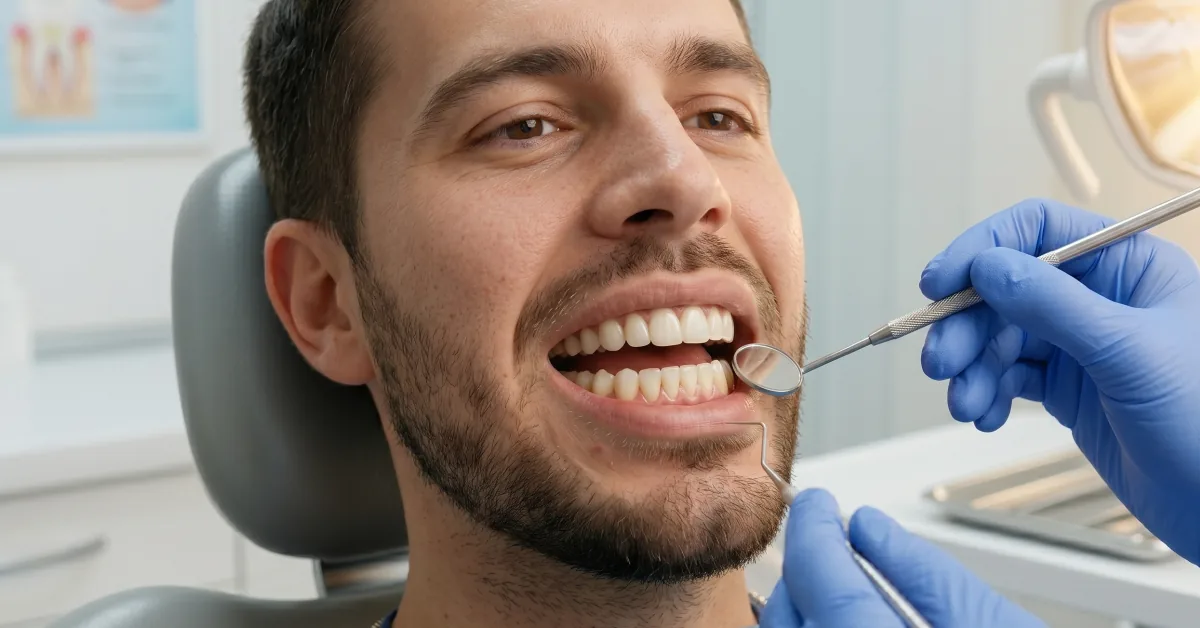
Gum recession is a far more common problem than you might think. It not only affects the aesthetics of your smile —making teeth look longer or "aged"— but also exposes the tooth roots to decay and sensitivity.
What is gum recession?
Gum recession occurs when the gum pulls back below the cemento-enamel junction, leaving the tooth root exposed. The root is not protected by enamel —only by cementum— which makes it far more vulnerable to decay and erosion.
Most common causes
- Periodontitis: Periodontal infection destroys bone and gum.
- Traumatic brushing: Too much force or a hard-bristled brush.
- Dental malposition: Teeth outside the bony arch tend to develop recession.
- Bruxism and parafunction: Excessive forces on the teeth damage the supporting tissues.
- Poorly planned orthodontics: Moving teeth beyond the available bone.
- Oral piercings: Continuous rubbing of the piercing damages the gum.
Risks of gum recession
- Tooth hypersensitivity: The exposed root is very sensitive to cold, heat and sweet foods.
- Root decay: Exposed roots are more vulnerable to decay.
- Compromised aesthetics: Teeth look too long or irregular.
- Progression: Without treatment, recession tends to worsen over time.
Available treatments
Subepithelial connective tissue graft
The gum graft is the most effective treatment for gum recession. Tissue is taken from the palate and placed in the area of recession. Predictable results with a high rate of root coverage.
Tunnel technique
A minimally invasive variant that inserts the graft beneath the gum without the need for long incisions. Shorter healing time and excellent aesthetic results.
Acellular dermis (AlloDerm®)
For cases where it is preferable not to take tissue from the palate. A biologically derived material with results comparable to an autologous graft.
Prevention
- Use a soft-bristled brush.
- Brush with gentle movements, without excessive pressure.
- Use dental floss or an interdental brush daily.
- Attend regular check-ups to detect recession in time.
If you already have gum recession, we recommend an assessment at our Dental Clinic in Argüelles, Madrid to determine the most suitable treatment.
Frequently asked questions
Frequently asked questions about this topic.
No. Gum tissue that has been lost does not regenerate by itself. What can be done is to halt the progression and, when indicated, restore the tissue with a gum graft that covers the exposed root.
It is performed under local anaesthetic, so you feel no pain during the procedure. Recovery is usually mild and managed with the instructions we give you; minimally invasive techniques (tunnel) shorten recovery.
The most common causes are periodontal disease, brushing too hard or with hard bristles, bruxism and dental malposition. Identifying the cause is key to lasting treatment.
Reviewed by Dra. Mercedes López
Periodoncia e Implantes · COEM Reg. No. 28008795
Last reviewed: 25 March 2026
Informational content reviewed by a registered professional at Debod Dental Clinic. It does not replace a personalised clinical assessment. View specialist profile.

Author
Dra. Mercedes López
Periodontics and Dental Implants
Dr. Mercedes López is a specialist in periodontics and dental implants, two deeply interrelated disciplines: a healthy periodontal foundation is the essential prerequisite for any successful implant. With extensive experience in the diagnos…
Meet the team
Did this article raise questions?
Talk directly with our team of specialists. First consultation with no obligation.
Book a consultation