Dental Health
Can Advanced Periodontitis Be Cured?
Advanced periodontitis cannot always restore lost bone, but it can often be stabilised to protect your teeth for the long term.
What is advanced periodontitis? — The direct answer
Advanced periodontitis is a serious form of gum disease in which inflammation caused by bacteria below the gum line damages the bone and fibres that hold teeth in place. It cannot always be “cured” in the sense of growing back every millimetre of lost bone, but it can often be treated and stabilised so that bleeding, infection and further damage are controlled.
At Debod Dental Clinic in Argüelles, Madrid, we assess periodontitis carefully before recommending treatment. The aim is honest and practical: protect the teeth that can be maintained, manage the infection, and create a plan you can realistically follow for the long term.
Many people ask, “Is it normal that my gums bleed but do not hurt?” Yes, bleeding gums are common in periodontal disease, and advanced disease may progress with very little pain. That is precisely why waiting for a toothache can be misleading. Think of it more like a slow leak behind a wall: the damage can continue before it becomes obvious from the outside.
Why does this matter for your dental health?
Your gums and jawbone are the foundation around your teeth. When periodontitis advances, that foundation gradually becomes lower and weaker. Teeth may start to look longer as the gums recede, spaces can appear between them, and biting may feel different. Some people notice persistent bad breath, pus around a tooth, or a tooth that has become mobile.
The disease is linked to bacterial biofilm, the sticky layer that forms around teeth. Below the gums, that film can harden into calculus, sometimes called tartar. Brushing alone cannot remove deposits already under the gum line. Smoking or vaping nicotine, diabetes that is not well controlled, inconsistent cleaning between teeth, family history and missed maintenance appointments can all increase risk.
What happens if you leave advanced periodontitis untreated? More supporting bone may be lost, and teeth that were once maintainable may become difficult or impossible to save. The encouraging part is that treatment can change that direction. The first goal is not cosmetic perfection; it is a calm, healthy mouth with gums that do not bleed and teeth that can function comfortably.
How is advanced periodontitis diagnosed?
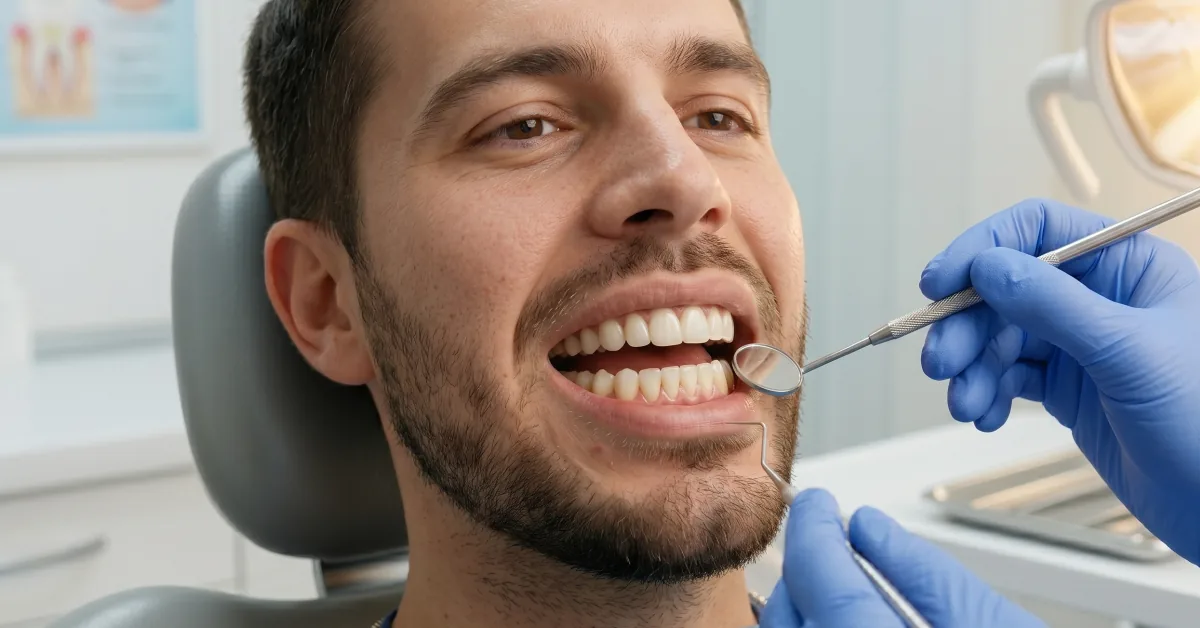
A diagnosis cannot be made from a quick look or from being told that you “need a cleaning”. We measure the gums around every tooth at six points using a fine periodontal probe. This records the depth of the space between tooth and gum, known as a periodontal pocket, and whether it bleeds.
We also assess how much attachment and bone support has been lost, whether teeth move, and whether disease has reached the area between roots of multi-rooted teeth. Dental X-rays help us see the bone level. In selected situations, 3D imaging may be useful for planning a specific tooth, surgery or future rehabilitation.
Healthy gums should generally be a coral-pink colour rather than puffy, red or prone to bleeding. Yet appearance alone is not enough. Someone can have gums that look reasonably calm at the front and still have active disease in deeper areas. That assessment is the open question worth answering before any treatment is chosen.
What does treatment for advanced periodontitis involve?
Treatment is usually carried out in stages. First comes tailored advice on brushing and cleaning between the teeth. Interdental brushes are often more effective than floss where there is enough space, but the right size and method matters. Using the wrong brush can feel uncomfortable and lead people to give up, so it should be chosen individually.
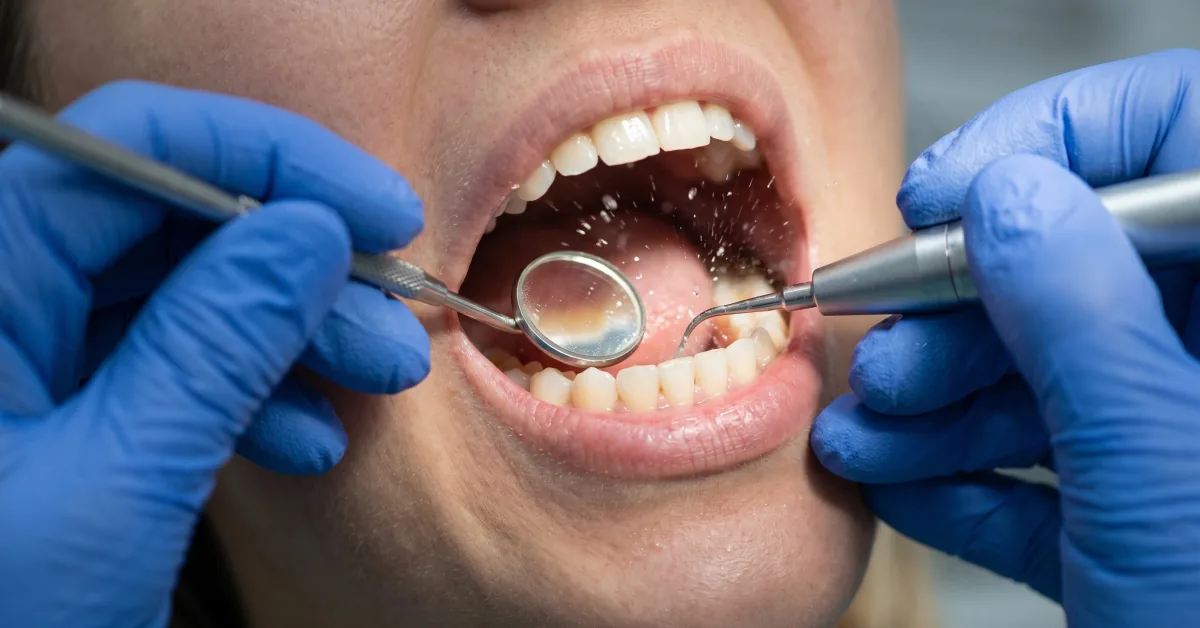
The next stage is professional removal of bacterial biofilm and calculus above and below the gums. This is often called deep dental cleaning or scaling and root planing. “Root planing” is traditional language for carefully cleaning root surfaces beneath the gums. Local anaesthetic can be used where necessary.
After healing, we reassess. Are there still deep pockets? Do they bleed? Has inflammation settled? European periodontal guidance defines successful control as having no pockets over 4 mm that bleed on probing and no deep pockets of 6 mm or more. This does not mean every mouth follows an identical timetable. The strongest early response is often seen within one to two months, while further improvement may continue for several months.
Some sites remain active despite excellent initial care. In those selected areas, further cleaning or periodontal surgery may be appropriate. Surgery can give access to a difficult deep area; in certain bone defects, regenerative techniques using membranes, enamel matrix derivatives or grafting material may recover part of the lost support. Research shows a meaningful average additional attachment gain in suitable defects, but it is not a promise to rebuild everything that has been lost. The exact anatomy makes a real difference. European Federation of Periodontology guidance sets out this step-by-step approach.
Can lost bone from periodontitis grow back?
Sometimes, partly. Regenerative periodontal treatment can be worthwhile when there is a deep bone defect with favourable shape and enough healthy tissue around it. It is not appropriate for every tooth or every pattern of bone loss.
A large review of clinical trials found that regenerative approaches produced, on average, greater gain in attachment than flap surgery alone. That average was 1.34 mm, and outcomes varied between patients and defects. This is helpful evidence, but it is not a guarantee of complete regeneration or a reason to skip the basics of plaque control and maintenance. You can read the systematic review here.
Here is the part patients sometimes do not expect: the procedure itself is only one chapter. If plaque returns around the gums, nicotine use continues, diabetes remains poorly controlled, or review visits are missed, the disease can reactivate. Periodontitis is better understood as a condition that needs long-term control, much like keeping a garden maintained after removing weeds.
What if a tooth cannot be saved?
A tooth may have a poor prognosis if it has very little remaining bone support, a fracture, infection that cannot be controlled, or damage that makes comfortable function unrealistic. Extraction may then be the kinder and safer choice. This is never something to decide from an X-ray alone; symptoms, tooth position, bite, hygiene access and your overall plan all matter.
If extraction is needed, we discuss how to preserve the area and whether replacement is suitable. Dental implants can be an option for some patients, but an implant does not cure periodontitis. Implants can also develop inflammatory disease around them, called peri-implantitis, especially where plaque control is poor or gum disease remains unstable.
That is why the priority is always stabilising periodontal health first. A replacement tooth should sit in a mouth that is ready to look after it.
Questions patients often ask
Is it normal that my gums bleed when I brush?
No, regular bleeding is not something to ignore. It may be caused by gingivitis, the earlier form of gum inflammation, or by periodontitis. Brushing more gently may reduce trauma, but it will not remove infection below the gums. Arrange an assessment if bleeding lasts more than a few days or keeps returning.
Does advanced periodontitis treatment hurt?
Deep cleaning is commonly performed with local anaesthetic when needed, so you should not feel sharp pain during treatment. Afterwards, gums can feel tender and teeth may be temporarily more sensitive to cold. If you are anxious, tell the dental team before the appointment so treatment can be planned at a comfortable pace.
How much does advanced periodontitis treatment cost?
Costs depend on how many teeth are affected, the depth and pattern of bone loss, whether surgery is indicated and the maintenance programme afterwards. An accurate estimate needs a full periodontal examination and X-rays, rather than a generic price. Your first diagnostic visit at Debod Dental Clinic is included, allowing us to explain the findings and options clearly.
How long does treatment for advanced periodontitis last?
The active phase often takes several appointments over weeks or months, followed by reassessment. The condition itself requires lifelong maintenance, often every three to six months initially, tailored to your risk and response. This ongoing care is what helps keep treatment results stable.
Is advanced periodontitis urgent?
It deserves prompt assessment because it can advance without pain. Seek urgent care if you have facial swelling, pus, fever, intense pain, a tooth that suddenly becomes much looser, or difficulty swallowing or breathing. These signs may indicate an acute infection.
Is it worth treating periodontitis if my teeth already move?
Often, yes. Mobility does not automatically mean a tooth must be removed. Once inflammation is controlled, some teeth feel firmer or function more comfortably. Whether a particular tooth is maintainable needs an individual examination, including bone support, bite forces and the ability to keep the area clean.
What should you know before your first visit?
Bring any recent dental X-rays, a list of medicines and information about health conditions such as diabetes. If you smoke or vape nicotine, being open about it helps us plan responsibly. Four useful steps before your appointment are:
- Brush twice daily with fluoride toothpaste, but do not scrub bleeding gums aggressively.
- Keep cleaning between your teeth each day using the method you already tolerate.
- Note any swelling, bad taste, bleeding, pain or change in tooth position.
- Do not start antibiotics left over from another illness without professional advice.
We will not diagnose advanced periodontitis from symptoms alone. A proper assessment looks at the whole picture, including the areas you cannot see in a mirror. If you have been avoiding the dentist because you are worried about being judged, please do not. Gum disease is common, and there is a sensible next step from wherever you are starting.
When is it urgent to see a dentist?
Contact a dentist promptly if you develop swelling of the gum or face, pus, fever, severe pain, a bad taste with increasing swelling, or a tooth that becomes rapidly loose. Difficulty breathing, swallowing, or swelling spreading towards the eye or neck needs emergency medical attention.
Less dramatic signs still merit an appointment soon: bleeding gums, ongoing bad breath, receding gums, teeth moving apart, discomfort when biting or a change in the way your teeth meet. Does it hurt? Sometimes. Does it always hurt? No. That is why a painless mouth is not proof that the gums are healthy.
For routine prevention and early assessment, a dental examination and cleaning can identify concerns before they become more difficult to manage.
Why choose Debod Dental Clinic?
At Debod Dental Clinic, C. de Ferraz, 24, Argüelles, 28008 Madrid, we focus on clear diagnosis and minimally invasive treatment wherever possible. Periodontal care starts with careful measurements and imaging where indicated, then a treatment plan based on what your gums and teeth actually need.
Our in-house digital laboratory, Debod Dental Lab, supports planning and restorative work when teeth need protection or replacement after periodontal treatment. Intraoral scanning and 3D imaging can be used when clinically appropriate, helping us plan with precision rather than guesswork.
Your first diagnostic visit is included. We will explain what we find, what can realistically be stabilised and what each option involves before you decide. You can contact Debod Dental Clinic on +34 914 47 62 25 or book an appointment. We are open Monday to Friday, 9:00–20:00, close to Ventura Rodríguez metro station in Madrid.
Frequently asked questions
Frequently asked questions about this topic.
Advanced periodontitis does not have a permanent cure that always restores all lost gum and bone support. It can often be treated and stabilised, with inflammation controlled, bleeding reduced and teeth maintained for many years through ongoing care.
Treatment is planned to keep you comfortable. Deep cleaning below the gums is usually carried out with local anaesthetic when needed, so you should not feel sharp pain. Some tenderness or sensitivity afterwards can happen and is usually temporary.
The cost depends on the severity of the disease, the number of teeth involved, whether surgery or regeneration is suitable, and the maintenance needed afterwards. A full periodontal assessment is needed before an accurate treatment plan and estimate can be provided.
Initial treatment and reassessment commonly take several months. The greatest improvement after cleaning beneath the gums is often seen during the first one to two months, although healing may continue for up to five or six months. Maintenance care is lifelong.
It should be assessed promptly, even when it is painless, because it can progress silently. Seek urgent dental care if you have swelling, pus, fever, severe pain, a rapidly loosening tooth or difficulty swallowing or breathing.
Reviewed by Dr. César Rodríguez
Prostodoncia · Rehabilitación Oral · COEM Reg. No. 28015194
Last reviewed: 16 September 2026
Informational content reviewed by a registered professional at Debod Dental Clinic. It does not replace a personalised clinical assessment. View specialist profile.

Author
Dr. César Rodríguez
Prosthodontics · Full Oral Rehabilitation
Dr. César Rodríguez is a distinguished prosthodontist with a Master's in Facial Prosthetics and Occlusion from the Complutense University of Madrid. Initially trained in Dentistry at the Central University of Venezuela, his credentials have…
Meet the team
Did this article raise questions?
Talk directly with our team of specialists. First consultation with no obligation.
Book a consultation