Dental Health
Invisible Orthodontics Before and After in Argüelles
Before-and-after images can be helpful, but a proper orthodontic diagnosis explains what is achievable in your own smile.
The Debod team’s perspective on invisible orthodontics before-and-after cases
At Debod Dental Clinic in Argüelles, Madrid, we understand why before-and-after photographs are often the first thing people look for when considering invisible orthodontics. They can make a crowded smile, a gap or an uneven bite feel easier to picture. Yet a photograph should start a conversation, not replace a diagnosis.
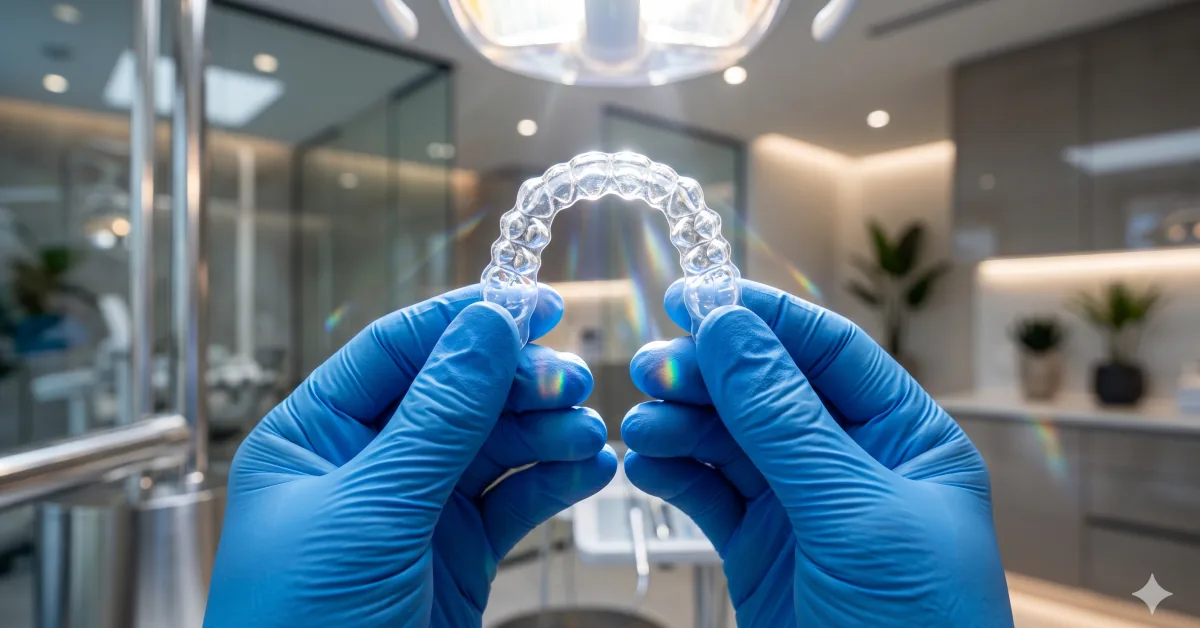
Clear aligners are removable, transparent trays that move teeth in carefully planned stages. For the right patient, they can improve crowding, spaces, certain crossbites, deep bites and increased overjet. But two smiles that look similar in a photograph may need very different treatment. The roots, gum health, bite, jaw relationship and previous orthodontic history all matter.
The most useful before-and-after result is one that explains the starting point, not just the final smile. Was there crowding because the teeth were too large for the dental arch? Was there a relapse after braces years ago? Was the front-tooth appearance linked to a bite problem? These details change the plan.
People often ask, “Is it normal that my own simulation does not look exactly like an online before-and-after image?” Yes. It is normal. Digital planning helps us visualise a route, rather like a satnav suggests a journey, but traffic, roadworks and the conditions of the road still affect how that journey unfolds. In orthodontics, biological response and aligner fit affect the route.
A first diagnostic visit allows the team to assess whether clear aligners are appropriate and discuss realistic objectives. For some people, Invisalign clear aligners are an excellent option. For others, a hybrid approach or fixed braces may offer more predictable control for a particular movement. That honest distinction matters.
What most clinics do not tell you about invisible orthodontics before-and-after cases
A polished before-and-after image can hide the parts of treatment that make the result stable and healthy. Attachments, for example, are small tooth-coloured composite shapes placed on selected teeth. They give the aligner something to hold, helping it apply the intended force. Interproximal reduction, sometimes called IPR, is the careful removal of a tiny amount of enamel between selected teeth to create space when clinically appropriate.
Neither is a failure. They are often part of sound planning.
The same applies to refinements: additional aligners prescribed after the first series when a tooth has not reached the planned position or the bite needs fine-tuning. Studies show that certain movements, such as rotations, vertical movements and complex root control, do not always occur exactly as predicted by the software. Research on upper-molar distalisation found that the achieved movement was lower than the planned movement, which is why refinements may need to be anticipated in suitable cases. D’Antò et al., 2023
A simulation is a proposal, not a promise. This is particularly relevant when closing complex spaces, correcting rotated teeth, moving teeth vertically or treating a more involved bite. A prospective study of lateral-incisor extrusion found that the average achieved movement was below that prescribed in the plan. Groody et al., 2023
What happens if an aligner does not fit fully? Do not simply move on to the next tray. Contact the clinic. Continuing without checking can mean that the teeth stop following the planned sequence. Consistent wear is also part of the treatment: aligners are commonly worn around 20 to 22 hours a day, removed for meals and drinks other than water, then replaced after cleaning the teeth and trays.
“Does invisible orthodontics hurt?” is another fair question. Pressure or short-lived tenderness can happen when a new aligner is started. A randomised clinical trial found lower pain levels with aligners than with fixed appliances in the initial period, but comfort is personal and should never be used to dismiss persistent pain. Clinical trial, 2024
Our clinical experience
We do not present illustrative examples as evidence that the same result can be reproduced for every person. Each mouth has its own biology, habits and starting position. The following are hypothetical educational scenarios, not real patient cases.
A hypothetical 40-year-old patient may arrive with mild lower-front crowding after orthodontic relapse in adulthood. Following examination of gum health, tooth decay and bite contacts, aligners may be considered if the movements are suitable. The visible before-and-after change could be a more even front smile, but the clinical goal would also include contacts that allow the teeth to meet comfortably and a retention plan afterwards.
A hypothetical patient in their late twenties may be concerned about a small gap between the upper front teeth. The gap may look simple, but the assessment must check why it exists: tooth proportions, tongue habits, gum condition and the bite can all play a part. Clear aligners might be appropriate, sometimes with attachments or other planning measures. The open question is stability: without retention and management of the cause where possible, a gap can reopen.
A hypothetical patient who wants porcelain veneers for uneven front teeth may first benefit from orthodontic assessment. Moving teeth into a more favourable position can sometimes reduce the amount of tooth alteration needed for cosmetic work. Healthy gums, no active decay and a stable bite should come first; attractive teeth should retain natural texture and character, rather than looking uniformly square or artificial.
How do I know if I need invisible orthodontics rather than another cosmetic treatment? A full assessment is the answer. The visible concern may be a tooth position, a bite issue, tooth shape, gum health or a combination. Good treatment starts by identifying the cause.
Questions patients often ask about invisible orthodontics before-and-after cases
Are before-and-after photographs enough to choose a clinic?
No. They may show a visual change, but they cannot show whether the starting diagnosis was comparable to yours, whether the gums were healthy, how the bite was managed, how long treatment took or what retention was used. Ask for a diagnosis and clear explanation of the proposed plan.
How long does invisible orthodontics take?
There is no responsible single answer without an examination. Mild alignment can take less time than a complex bite correction, but treatment duration also depends on aligner wear, how each tooth responds and whether refinements are needed. The plan should include a discussion of the expected active phase and the retention stage.
Is it normal that I need attachments or enamel reduction?
It can be. Attachments help certain teeth move more predictably. IPR is only considered where appropriate and should be explained before it is carried out. Both are planned tools, not automatic requirements for every case.
What happens if I lose an aligner?
Contact the clinic promptly. Depending on the stage and how long you have worn it, you may be advised to use the previous aligner, a replacement or another option. Do not guess, especially if the next tray feels tight or does not fit.
Is invisible orthodontics worth it for a previous orthodontic relapse?
It may be, particularly when the relapse is mild to moderate and the treatment objectives are suitable for aligners. The assessment needs to establish why the teeth moved and how to retain the result afterwards. A retainer is not an optional extra; it is part of protecting the work done.
Can aligners fix every bite problem?
No. Clear aligners have well-supported use in many mild-to-moderate cases, especially in non-growing patients, but some complex movements or skeletal jaw discrepancies may need another approach or orthodontic-surgical assessment. Papadimitriou et al., 2018
What technology do we use at Debod for invisible orthodontics?
At Debod Dental Clinic, planning begins with clinical information rather than a sales image. An intraoral scanner creates a detailed digital model of the teeth without traditional impression material. Clinical photographs, bite assessment and radiographs when justified help complete the picture.
A cone-beam CT scan, often called a 3D scan, is used when clinically indicated rather than routinely for every orthodontic patient. It can provide three-dimensional information that is useful in selected situations, while avoiding unnecessary imaging. The team considers the benefit of each diagnostic record for the individual plan.
Digital planning lets us assess tooth positions, expected movement stages and the practical details that an online before-and-after image cannot show. It also helps make conversations clearer: what we aim to change, where the limits are, and what may require adaptation as treatment progresses.
Debod Dental Lab, our in-house digital laboratory, supports the clinic’s digital workflow. This can be particularly useful when planning retainers and other custom-made elements after active orthodontic treatment. The end point is not simply a straighter photograph. It is a result that has been assessed for comfort, function and a sensible plan for keeping it.
If you are considering invisible orthodontics in Argüelles or elsewhere in Madrid, bring your questions to a diagnostic visit. Ask what your before-and-after result is intended to improve, what alternatives exist, whether refinements may be needed and how retention will work. You can book an appointment to discuss your individual situation with the Debod Dental Clinic team.
Frequently asked questions
Frequently asked questions about this topic.
No. A digital simulation is a treatment-planning tool, not a guarantee. Tooth movement varies between people, and some cases need refinements to reach the planned result.
It depends on the bite, the movements required, daily wear and whether refinements are needed. A clinical assessment is needed before giving a realistic timeframe.
It can cause temporary pressure or tenderness when a new aligner is fitted, particularly during the first days. This is usually manageable, but persistent pain should be assessed.
Teeth may not track the planned movement, the aligner may stop fitting properly, and treatment may take longer or require additional aligners.
Yes. Teeth can move after active treatment, so retainers are normally needed to help maintain the result. The suitable retention plan depends on the individual case.
Reviewed by Dr. Víctor Guerrero
Ortodoncia · Ortopedia Dentofacial · COEM Reg. No. 28013382
Last reviewed: 18 September 2026
Informational content reviewed by a registered professional at Debod Dental Clinic. It does not replace a personalised clinical assessment. View specialist profile.

Author
Dr. Víctor Guerrero
Orthodontics · Dentofacial Orthopaedics
Dr. Víctor Guerrero is a leading specialist in orthodontics and dentofacial orthopaedics, recognised for his contributions to the fields of invisible orthodontics and skeletal anchorage. A graduate with honours in Dentistry and Orthodontics…
Meet the team
Did this article raise questions?
Talk directly with our team of specialists. First consultation with no obligation.
Book a consultation