Dental Health
Invisible Orthodontics Cost in Argüelles, Madrid
Considering clear aligners in Argüelles? See what shapes the price, what should be included and how to compare plans with confidence.
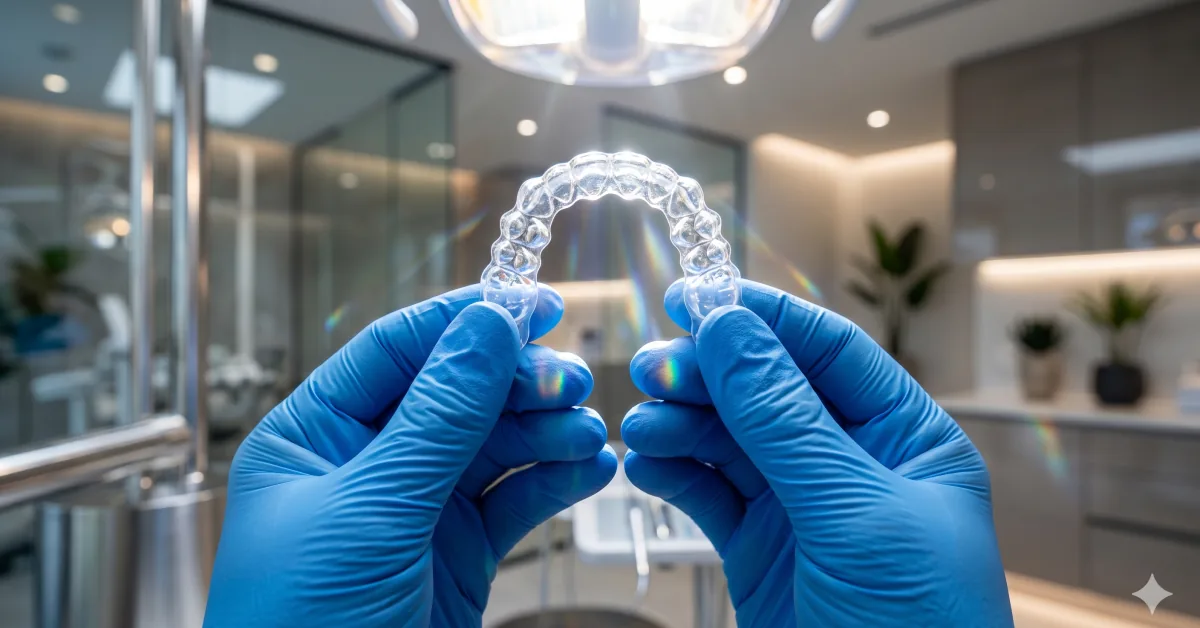
What does invisible orthodontics include at Debod Dental Clinic?
At Debod Dental Clinic in Argüelles, invisible orthodontics is not simply a box of transparent aligners. It is a planned orthodontic treatment led by Dr. Víctor Guerrero, with an assessment of your teeth, gums and bite before deciding whether aligners are the right route for you.
The treatment normally includes diagnosis, digital planning, a sequence of removable aligners and review appointments. Some cases also need small tooth-coloured attachments, fine enamel reshaping between teeth, known as interproximal reduction, or elastic bands. Each has a purpose: making the planned movement more predictable, rather than just making teeth look straighter in photographs.
For patients asking how much invisible orthodontics costs in Argüelles, Madrid, the most honest answer is that it depends on the work needed to achieve a healthy bite as well as a pleasing smile. The detail that can change the quote is often not obvious at first glance. We will come back to exactly what to check before comparing prices.
How much does invisible orthodontics cost in Madrid? — Honest prices
A published local reference in Argüelles lists €3,899 for a complete clear-aligner treatment, although that is another clinic’s advertised package, not a quote from Debod Dental Clinic. Across Madrid, Sanitas’ 2026 published fees list Invisalign Express at €2,400 for both arches, Lite at €4,100, Moderate at €4,400 and Comprehensive at €5,150, with planning, refinements and retainers shown separately in some cases.
These figures are useful as a guide, not as a diagnosis or promise. A shorter treatment for mild crowding is different from correcting rotations, spacing, a deep bite or a marked overjet. The number of aligners, whether one or both arches are treated, the need for refinements and the retention plan can all affect the final cost.
At Debod Dental Clinic, the first diagnostic visit is included. The actual plan and fee are confirmed after the clinical examination and digital records, using an intraoral scan and, where indicated, 3D imaging or X-rays. This avoids the common problem of seeing an attractive headline price and later finding that scans, refinements or retainers were not included.
Financing is available for up to 60 months, with 0% interest for the first 12 months and no deposit, subject to the agreed terms. Before making a decision, ask for the proposal in writing. It should state the aligner system, the arches being treated, review appointments, potential refinements, lost-aligner policy and retainers. That small checklist can make two apparently similar quotes much easier to compare.
How do I know whether I am an ideal candidate?
Clear aligners can work well for adults and teenagers who want a discreet, removable option and can wear them as instructed. They may be used for crowded teeth, gaps, rotated teeth, certain bite problems and relapses after previous braces.
The removable part is both their attraction and their responsibility. Aligners need to be worn for the time prescribed, generally taken out for eating and drinking anything except water, then cleaned before being put back in. Think of them like a carefully calibrated route on a map: skipping too many stages makes it harder to reach the intended destination.
How do I know if I need clear aligners rather than braces? The answer comes from the diagnosis, not from the material you would prefer to wear. Some complex skeletal discrepancies, difficult vertical or root movements, cases requiring extractions, or situations where wear compliance is unlikely may be better treated with fixed braces or a combined approach.
Active decay, gum disease or poor oral hygiene should be addressed first. Moving teeth through unhealthy gums is not sensible dentistry. The gums should be stable before orthodontics begins, and any decay needs treatment. If you are also considering cosmetic changes later, healthy teeth and a stable bite come before veneers or whitening.
There is another point worth knowing. A recent review found that refinements were common in complex clear-aligner cases, and some patients moved to fixed appliances. That does not mean aligners are ineffective; it means a responsible plan should discuss what is predictable, what may need adjustment and what alternatives exist. Research is useful, but it never replaces an individual assessment.
The step-by-step process at Debod
Your first visit starts with a conversation. What would you like to change? Is it crowding, spaces, a tooth that has shifted, difficulty biting, or confidence when you smile? Dr. Guerrero then examines the teeth, gums and bite rather than judging the smile from the front alone.
Digital records follow. These may include photographs, an intraoral scan, X-rays and 3D imaging when clinically indicated. The scan creates a detailed digital model of your mouth without traditional impression material. It helps plan each movement and shows why an apparently simple case may need more careful control.
The proposed plan explains the expected sequence, attachments if needed, any enamel reshaping and whether elastics are likely. At this stage you receive a clear estimate and can ask what happens if an aligner does not fit as expected. No one should feel pressured to accept treatment on the day.
Once treatment begins, you change aligners according to the schedule set for you and attend reviews so progress can be checked. Does invisible orthodontics hurt? Pressure is common when starting a new aligner, and tenderness can occur for a few days. Randomised studies have found lower pain in the first days with Invisalign than fixed braces in some groups, but discomfort differs from person to person.
When active tooth movement ends, retention begins. Retainers help keep teeth in their new position over the long term. This is not an optional afterthought; teeth can drift throughout life. It is also the part many headline prices leave unclear, so ask about it before committing.
Debod Dental Lab, our in-house digital laboratory, supports the clinic’s digital workflow where appropriate. It allows the clinical and laboratory teams to coordinate closely on planned work. Yet the technology is there to support professional judgement, not replace it.
Questions patients always ask before booking
Does invisible orthodontics hurt?
Most people describe pressure rather than sharp pain, particularly with a new aligner. It usually settles as you adapt. If an aligner is causing persistent pain, rubbing or does not sit properly, contact the clinic rather than trying to force it.
How long does invisible orthodontics take?
There is no reliable one-size-fits-all number. Mild corrections may take less time than complex bite changes, but the estimate depends on the planned movements, review findings and whether aligners are worn consistently. A digital simulation is a planning tool, not a guarantee of an exact finish date.
Is it normal that my speech changes at first?
Yes, a slight lisp can happen during the first days because your tongue is adapting to the aligners. Reading aloud and wearing them as directed usually helps the adaptation. If the change persists, mention it at your review.
What happens if I lose an aligner?
Contact your orthodontic team promptly. Depending on the stage and fit, you may be advised to use the previous aligner, move to the next one or arrange a replacement. Keep your last set safely; it can be useful if this happens.
Will the result last?
Teeth naturally have a tendency to move, even after orthodontics. Retainers and regular follow-up are the practical way to protect the result. Ask which type of retainer is recommended, how often to wear it and how replacements are handled.
Is clear-aligner treatment guaranteed?
Orthodontics cannot ethically promise an identical outcome for every mouth. A clinician can explain the planned objectives, likely limitations and alternatives after examining you. Careful follow-up and your cooperation with wearing the aligners both matter.
Why choose Debod Dental Clinic in Argüelles?
Choosing orthodontics is about more than finding the lowest initial number. At Debod Dental Clinic, patients receive a diagnostic-first approach from Dr. Víctor Guerrero, an orthodontics and dentofacial orthopaedics specialist with more than 15 years of experience in invisible orthodontics.
The clinic combines intraoral scanning, digital planning and the support of Debod Dental Lab, our in-house digital laboratory. This helps create a coordinated plan while keeping clinical decisions centred on your health, bite and real-life goals.
You will find us at C. de Ferraz, 24, Argüelles, 28008 Madrid, España, a short walk from Ventura Rodríguez metro station on Line 3. The first diagnostic visit is included, so you can understand whether invisible orthodontics is appropriate before deciding.
If your bite needs a different approach, we will say so. If aligners are suitable, you will receive a plan designed around your case, not a generic package. You can also explore our Invisalign clear aligner treatment, compare options such as dental crowns where restorative work is needed, or book an appointment to discuss your smile in person.
The best question is not only “Is the price good?” It is “What am I paying for, what is included, and is this plan right for my teeth and bite?” That is the conversation we invite you to have before starting treatment in Madrid.
Frequently asked questions
Frequently asked questions about this topic.
Published Madrid prices vary by the complexity and type of treatment. A clear written quote should confirm the brand, both arches, planned reviews, refinements and retainers after an in-person assessment.
It can cause pressure or temporary tenderness, especially when starting a new set of aligners. Research suggests initial discomfort may be lower than with fixed braces, but every patient responds differently.
It depends on the movements required, how consistently the aligners are worn and whether refinements are needed. Your orthodontist can give a personalised estimate after examination and digital planning.
Do not assume they are. Retainers are needed long term to help maintain the result, so ask whether they are included in the written treatment plan and what future replacement options cost.
Reviewed by Dr. Víctor Guerrero
Ortodoncia · Ortopedia Dentofacial · COEM Reg. No. 28013382
Last reviewed: 18 November 2026
Informational content reviewed by a registered professional at Debod Dental Clinic. It does not replace a personalised clinical assessment. View specialist profile.
Author
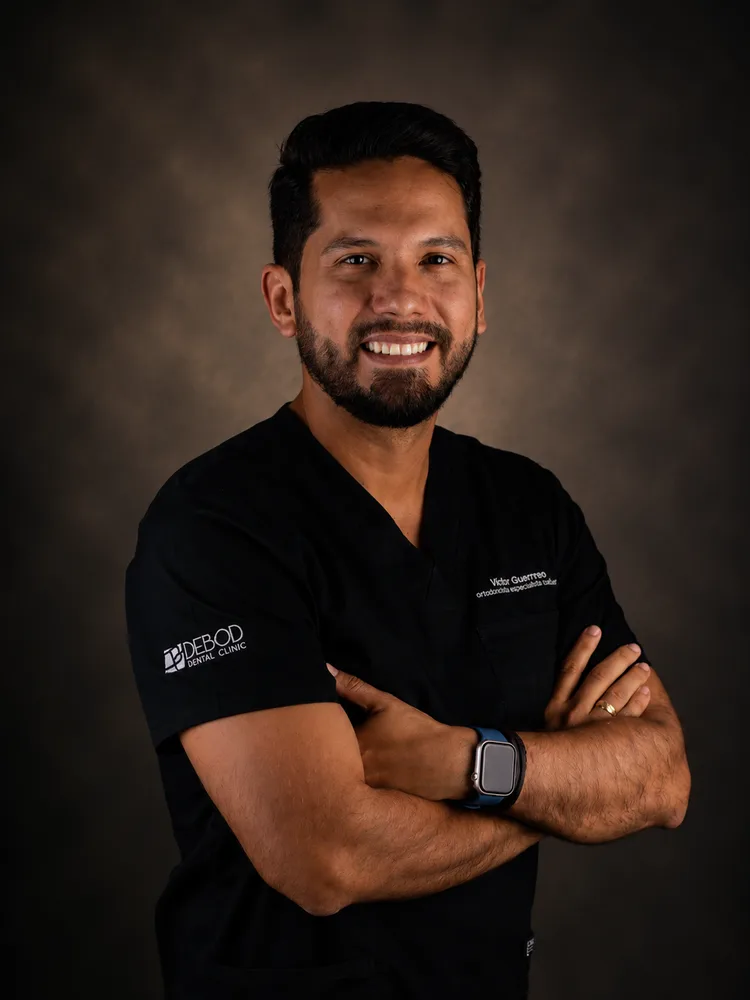
Dr. Víctor Guerrero
Orthodontics · Dentofacial Orthopaedics
Dr. Víctor Guerrero is a leading specialist in orthodontics and dentofacial orthopaedics, recognised for his contributions to the fields of invisible orthodontics and skeletal anchorage. A graduate with honours in Dentistry and Orthodontics…
Meet the team
Did this article raise questions?
Talk directly with our team of specialists. First consultation with no obligation.
Book a consultation