Dental Health
When Are Orthodontic Mini-Screws Advisable?
Orthodontic mini-screws can provide stable support for complex tooth movements. Find out when they may be advisable and what treatment involves.
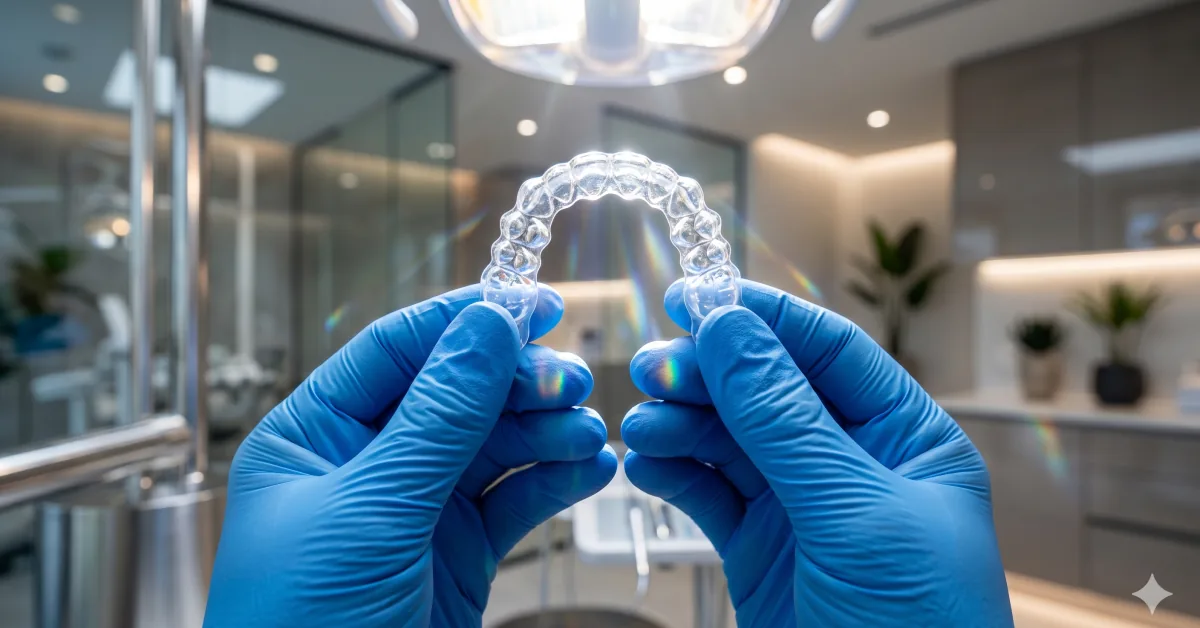
What are orthodontic mini-screws? — The direct answer
Orthodontic mini-screws are small temporary titanium screws placed in the jawbone to give an orthodontist a stable point of support while moving teeth. At Debod Dental Clinic in Argüelles, Madrid, they may be considered when braces or clear aligners need extra support to make a specific movement more controlled.
They are also called temporary anchorage devices, or TADs. Think of them as a small, temporary anchor point: instead of one tooth pulling against another tooth, the orthodontic force can work from the bone. They do not replace braces or clear aligners; they work alongside them when the treatment plan calls for it.
A mini-screw is placed under local anaesthetic and is removed once it has completed its role. The interesting question is not whether mini-screws are “better” for everyone. It is what precise movement they could make more predictable in your own mouth.
Why does this matter for your dental health?
Orthodontic treatment is about more than straight-looking front teeth. Teeth need to meet in a way that supports comfortable chewing, cleaning and long-term stability. If a tooth is moved without enough support, other teeth can drift in an unwanted direction. That is called loss of anchorage.
Mini-screws can help reduce that unwanted movement in selected cases. For example, after tooth extractions, the aim may be to move the front teeth backwards while keeping the back teeth as still as reasonably possible. In a multicentre clinical trial, patients treated with temporary anchorage devices had less forward movement of the first molar during upper space closure than those using conventional anchorage. That means improved control, not a guarantee that no movement will happen at all. Read the clinical trial.
They can also be useful for moving back molars, correcting an uneven bite, helping bring down an impacted tooth, or intruding a molar. Intrusion means gently moving a tooth slightly further into the bone. This may help manage an anterior open bite, where the front teeth do not meet when the back teeth are together.
The detail that often surprises patients is this: the mini-screw itself is not the treatment goal. It is simply a way of making the planned movement possible with less reliance on other teeth or, in some cases, on wearing elastics perfectly every day.
When are orthodontic mini-screws advisable?
Mini-screws may be advisable when a planned movement requires maximum anchorage. That can include retracting front teeth after extractions, where the orthodontist wants to avoid the molars moving forwards too much.
They may also be considered for:
- Moving molars backwards in certain Class II or Class III bite patterns.
- Intruding back teeth to help correct an open bite or prepare space for future restorative work.
- Correcting asymmetry, a tilted bite plane or selected impacted teeth.
- Reducing dependence on removable appliances or elastics for a particular movement.
They are not routinely necessary for every orthodontic case. A study in adolescents found no clinically meaningful difference between mini-screws, a Nance button and headgear for maximum anchorage in that study population. The right choice depends on the desired movement, age, bone anatomy, gum health, tolerance of alternatives and personal preferences. Read the study.
How do I know if I need orthodontic mini-screws? An examination is the only reliable way to tell. Your orthodontist should explain the movement being planned, what support is needed, alternatives that may work and why a mini-screw may or may not suit you.
What happens during mini-screw treatment?
Before placement, the orthodontist assesses your teeth, bite, gums, roots and available bone. X-rays are usually needed and, for some cases, three-dimensional imaging may be appropriate to plan the position carefully.
The gum is numbed, then the mini-screw is inserted into a selected area of bone. A small elastic chain, spring or other orthodontic attachment connects it to the teeth or appliance. Depending on the planned mechanics and position, it may be used soon after placement or after a short period.
Good hygiene is part of the treatment, not an optional extra. Inflammation around a mini-screw can reduce its chance of staying stable. Research on mandibular distalisation found lower success where inflammation was present. Read the study.
Once the planned movement is complete, the screw is normally unscrewed in the dental clinic. The small opening generally heals naturally. The exact timing varies, which is why regular orthodontic reviews matter.
Questions patients often ask
Is it normal for an orthodontic mini-screw to feel strange at first?
Yes. A new mini-screw can feel unfamiliar, especially if your cheek or tongue notices its head. Mild tenderness or pressure may occur shortly after placement. A protective wax or adjustment can sometimes help if it rubs.
Pain that becomes stronger after 48 to 72 hours, marked swelling, discharge, fever or a screw that feels loose needs prompt review. Do not try to tighten, remove or adjust it yourself.
Does having an orthodontic mini-screw hurt?
Placement is carried out with local anaesthetic, so you should not feel sharp pain during the procedure. You may notice pressure. Afterwards, many people report short-lived soreness rather than severe pain, but experiences differ.
A mini-screw should not be presented as painless for every person. Your orthodontist can discuss sensible pain relief, if suitable for you, and what level of discomfort is expected.
How long do orthodontic mini-screws take to work?
The screw is usually quick to place, but its working time depends on the tooth movement it supports. It may stay in place for months and occasionally longer. Orthodontic treatment moves teeth gradually because the surrounding bone needs time to adapt.
Can it make treatment shorter? Sometimes it can simplify a difficult movement, but evidence on total treatment time is not consistent enough to promise a faster result. The aim is controlled biomechanics, not rushing teeth.
What happens if an orthodontic mini-screw becomes loose?
A loose mini-screw may no longer provide reliable support. Contact your orthodontic clinic so it can be assessed. It may be removed, allowed to heal, or replaced in a different suitable position if the treatment plan still requires it.
Failure does not mean the whole orthodontic treatment has failed. A systematic review found that success varies according to the placement area, with root contact associated with a greater risk of failure. This is one reason careful planning and follow-up matter. Read the systematic review.
How much do orthodontic mini-screws cost in Madrid?
There is no honest single price because the cost depends on how many are needed, where they are placed, the imaging required and the overall orthodontic plan. Ask for a clear written estimate after assessment, including whether replacement would be charged separately if a screw loses stability.
At Debod Dental Clinic, a first diagnostic visit is included. A personalised plan should only be confirmed once the orthodontist has assessed your bite, gum health and imaging.
Are mini-screws suitable with Invisalign or other clear aligners?
They can be used alongside clear aligners in selected cases, but suitability is individual. The aligner plan, attachments, bite and proposed movement all need to work together. The same principle applies to fixed braces: a mini-screw is an additional support tool, not a shortcut.
What should you know before your first visit?
- Bring details of previous orthodontic treatment, dental X-rays or relevant medical information if you have them.
- Tell the dentist about bleeding gums, loose teeth, jaw pain, medicines and any history of gum treatment.
- Ask which exact tooth movement the mini-screw would support and what alternatives are reasonable.
- Ask about the number and position of screws, cleaning instructions, reviews and what happens if one needs replacement.
Healthy gums come first. Active gum disease, untreated decay, local infection or poor plaque control may mean placement should wait. This is not a setback; it is the sensible order of care.
During your consultation, the orthodontic team can assess whether fixed braces or Invisalign clear aligners are suitable, and whether skeletal anchorage could add value. No online photograph or generic answer can replace that examination.
When is it urgent to see a dentist?
Seek prompt advice if you have increasing pain after the first few days, swelling, pus, bleeding that does not settle, fever, difficulty swallowing, or a mini-screw that is loose and causing injury. Contact your orthodontic team rather than attempting to alter the appliance.
A sharp edge rubbing the cheek is usually less urgent but still worth reporting promptly, especially if it is causing an ulcer. Good cleaning around the mini-screw with a soft toothbrush and an interdental brush, where advised, helps reduce irritation.
Orthodontic care should be diagnosed, prescribed and monitored in person by a qualified professional. The Spanish Agency of Medicines and Medical Devices advises against self-managed or online-only orthodontic treatment without professional supervision. Read the AEMPS guidance.
Why choose Debod Dental Clinic?
Debod Dental Clinic is in Argüelles, Madrid, near the Temple of Debod and Ventura Rodríguez metro station. We take an honest dentistry approach: the recommendation should match your clinical needs, not a one-size-fits-all trend.
For orthodontic assessment, planning may include an intraoral scan and, when clinically justified, 3D imaging. These records help assess roots, bone and the bite before deciding whether mini-screws are appropriate.
Debod Dental Lab is our in-house digital laboratory, supporting coordinated planning when orthodontics needs to work alongside restorative care. If your case also involves damaged teeth or existing restorations, this can help the team consider the wider picture, including options such as dental crowns.
Your first diagnostic visit is included. To discuss orthodontic mini-screws, braces or aligners in a calm, personalised consultation, book an appointment with Debod Dental Clinic.
Frequently asked questions
Frequently asked questions about this topic.
They are placed with local anaesthetic, so placement should not be painful. Mild pressure or soreness for a short time afterwards can occur, and persistent or worsening pain should be checked by your orthodontist.
The cost depends on the number of mini-screws needed, their position, the orthodontic plan and whether imaging is required. A personalised estimate should be confirmed after an in-person assessment.
They remain in place only while they are needed for the planned tooth movement. This may be several months or longer, depending on the case. They are normally removed in the clinic once their job is complete.
It is not usually an emergency, but you should contact your orthodontic team promptly. A loose mini-screw may need review, removal or replacement so that treatment can continue safely.
No. Mini-screws do not replace braces or clear aligners; they provide temporary support for selected movements. The best option depends on your bite, bone, gum health, treatment goal and preferences.
Reviewed by Dr. Víctor Guerrero
Ortodoncia · Ortopedia Dentofacial · COEM Reg. No. 28013382
Last reviewed: 20 November 2026
Informational content reviewed by a registered professional at Debod Dental Clinic. It does not replace a personalised clinical assessment. View specialist profile.
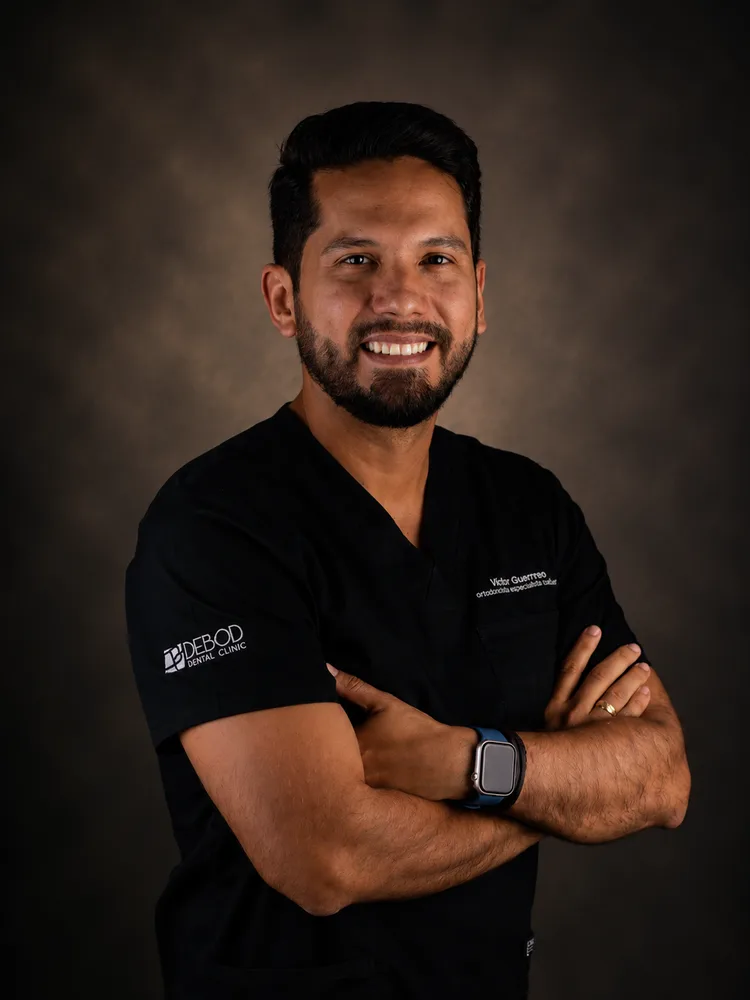
Author
Dr. Víctor Guerrero
Orthodontics · Dentofacial Orthopaedics
Dr. Víctor Guerrero is a leading specialist in orthodontics and dentofacial orthopaedics, recognised for his contributions to the fields of invisible orthodontics and skeletal anchorage. A graduate with honours in Dentistry and Orthodontics…
Meet the team
Did this article raise questions?
Talk directly with our team of specialists. First consultation with no obligation.
Book a consultation