Cosmetic Dentistry
What to Do If Your Dental Crown Comes Off
A loose or detached crown is usually fixable. Keep it safe, avoid home glue and arrange a dental assessment promptly.

What is a detached dental crown? — The direct answer
A detached dental crown is a crown that has lost its grip on the tooth underneath and has become loose or come off completely. At Debod Dental Clinic in Argüelles, Madrid, we advise keeping the crown safe, avoiding household glue and arranging a dental assessment promptly — ideally within 24 to 72 hours.
A crown coming off does not automatically mean the tooth is lost or that you need a new crown. In many cases, the crown can be cleaned and re-cemented. The key is finding out why it loosened before putting it back. That small detail can make all the difference.
A crown is like a fitted protective cap. It relies on the tooth beneath it, the way it fits and the cement holding it in place. When one part of that system changes, the crown may detach. It can feel alarming, particularly if it happens while eating, but there are sensible steps you can take today.
Why does this matter for your dental health?
The tooth beneath a crown has usually been shaped to create room for the restoration. Without its protective cover, it may feel sensitive to cold air, drinks or pressure when chewing. It may also be more vulnerable to chipping, especially if you bite on something hard.
The crown itself may still be perfectly usable. A retrospective study of crowned teeth needing further treatment found that re-cementing was the most common intervention, which is reassuring: loss of retention does not necessarily mean the tooth cannot be saved. You can read the study on PubMed.
What happens if you leave a crown off for too long? Food and plaque can collect around the exposed tooth, decay may develop at the edge, and the tooth can move or fracture. Think of it as leaving a well-fitted cover off something delicate. It may be fine for a short time, but it is not a good arrangement to prolong.
A detached crown can also be the first sign of an issue hidden underneath: decay at the crown edge, a crack in the tooth, a broken filling or excessive bite pressure. This is why simply sticking it back on at home is not a safe solution.
What should you do straight away?
If the crown has come out completely, pick it up carefully and check that you have not swallowed it. Rinse it gently under water and place it in a clean, secure container. Bring it to your appointment.
Do not force a crown off if it is still partly attached. If it is very loose and likely to be swallowed, avoid chewing on that side and call for advice. A dentist can remove it safely if necessary.
- Do not use superglue, craft glue or household adhesive.
- Brush the exposed tooth gently with a soft toothbrush.
- Avoid sticky, hard, very hot and very cold foods on that side.
- Arrange a priority dental appointment.
Temporary over-the-counter dental cement may seem tempting. It can make it harder to assess the fit, trap debris, affect the bite and complicate proper treatment. A crown should be re-cemented only once the tooth and restoration have been checked.
If you still have the crown, do not scrub its inside with a sharp object. It may contain fragile ceramic or a carefully shaped internal surface. Gentle rinsing is enough until your dentist sees it.
Why did my dental crown come off?
Crowns can detach because the cement has gradually worn away or been washed out over time. This can happen even with good brushing. The mouth is a demanding environment: moisture, temperature changes and years of chewing all place stress on dental materials.
Decay underneath or around the crown edge is another possible cause. Bacteria can enter where the crown meets the tooth, particularly if a gap develops. You may notice an unpleasant taste, bad breath localised to that area or food repeatedly getting trapped — but sometimes there are no obvious symptoms.
A crown may also loosen if the tooth underneath fractures, if the crown itself chips, or if there is not enough healthy tooth structure to hold it securely. Teeth that have had root canal treatment can be more brittle, so any pain on biting or a sharp crack sensation needs assessment.
Bruxism — clenching or grinding — places repeated force on crowns and teeth. In one long-term clinical study of all-ceramic crowns, bruxism was associated with a higher risk of failure. The material matters, but so do fit, bite forces and the health of the tooth supporting it. The research is available on PubMed.
There is one question people often ask after the initial worry has passed: can the same crown really be used again? Sometimes, yes. The answer depends on what the examination reveals.
What will the dentist check?
The dentist will inspect the crown for cracks, wear and signs that it no longer fits correctly. They will also examine the exposed tooth, the gum and the way your upper and lower teeth meet when you bite.
An X-ray is often needed to check for decay under the crown, infection around the root or changes that cannot be seen from the outside. This is a small image that lets the dentist look beneath the surface rather than guessing.
If the crown is intact, fits accurately and the tooth underneath is sound, the old cement can be removed and the crown may be re-cemented using the appropriate dental material. If there is decay, it must be removed first. If the tooth needs rebuilding, that is done before the crown is considered again.
Sometimes the crown is not suitable to re-use. It may be fractured, poorly fitting, worn down or unable to seal the tooth properly. In that situation, a new dental crown may be the healthier choice.
Modern crowns can be made from materials such as zirconia or lithium disilicate, selected according to the tooth position, bite and cosmetic needs. A recent clinical review found strong five-year survival outcomes for modern ceramic crown materials, although no material can compensate for a poor fit, untreated decay or damaging bite forces. See the clinical review on PubMed.
Questions people ask about a crown that has come off
Is it normal that my crown came off without pain?
Yes, it can happen without pain. Cement may fail gradually, and the tooth underneath may not be inflamed. Still, no pain does not confirm that everything is healthy. Decay, leakage or a small crack can develop quietly beneath a crown, so a dental examination remains worthwhile.
Does it hurt to have a crown re-cemented?
Re-cementing itself is usually straightforward and often does not hurt. The dentist cleans the crown and tooth, checks the fit and bite, then uses dental cement. If the tooth is sensitive, decayed or inflamed, you may need local anaesthetic or treatment first. The experience depends on the condition beneath the crown, not simply on the fact that it came off.
How much does it cost to fix a crown that has come off?
There is no honest single price without an assessment. Re-cementing an intact crown is different from treating decay, rebuilding the tooth, carrying out root canal treatment or making a replacement crown. At your first diagnostic visit, the clinical team can explain the findings and provide a clear treatment plan before work begins.
How long does it take to fix a loose crown?
If the crown fits well and there is no underlying problem, re-cementing can often be done in one visit. If decay is found, or if the tooth needs rebuilding or root canal treatment, the process takes longer. A replacement crown may also require digital impressions and laboratory work.
At Debod Dental Clinic, digital planning can include an intraoral scan, which is a small camera used to create a detailed three-dimensional model of the teeth. It helps assess fit accurately and plan restorations carefully. For more complex cases, a 3D scan may be considered when clinically appropriate.
Is a detached crown urgent?
A detached crown is normally a priority rather than a medical emergency. Try to arrange an appointment within 24 to 72 hours, even if you are comfortable. Do not wait weeks simply because there is no pain; the exposed tooth is more likely to become damaged or sensitive over time.
Can I eat after my crown comes off?
You can eat soft foods, but chew on the opposite side where possible. Avoid caramel, chewing gum, nuts, crusty bread, ice and anything very hard or sticky. Very hot or cold food may trigger sensitivity. Continue cleaning the area gently: avoiding the tooth completely can allow plaque to build up.
Can I put my crown back on myself?
No. Even if it seems to sit in the right place, it may not be fully seated or may alter your bite. A crown fitted slightly high can place too much pressure on the tooth and jaw. Household adhesives are not safe in the mouth and can make professional treatment more difficult.
Does a crown coming off mean I need an implant?
Usually not. A detached crown is not the same as losing a tooth. The first aim is to preserve your natural tooth whenever that is possible. If a tooth has a fracture below the gum line or cannot be restored safely, replacement options may include a dental implant, but this is decided only after a full assessment.
What should you know before your first visit?
Bring the crown in a clean container, even if you think it is broken. Small details of its shape and condition can help the dentist assess whether it can be re-used.
- Tell us when the crown came off and whether it happened while eating.
- Mention pain on biting, cold sensitivity, swelling, bleeding or a bad taste.
- Bring any relevant information about previous root canal treatment or crowns.
- Avoid using adhesive or temporary fixes before the appointment.
A first assessment is the moment to ask practical questions: Is the crown still usable? Is there decay? Do I need a new crown? How can this be prevented from happening again? The answers should come from the condition of your tooth, not assumptions.
When a replacement is needed, Debod Dental Lab, our in-house digital laboratory, helps the clinic coordinate restorative planning with close attention to fit and a natural appearance. A crown should blend with your smile and bite comfortably, rather than looking overly uniform or artificial.
When is it urgent to see a dentist?
Seek same-day urgent dental care if you have severe pain that is not controlled, increasing swelling of the face or neck, fever, persistent bleeding, significant trauma or a crown that has been swallowed or inhaled.
Difficulty swallowing or breathing, rapidly worsening facial swelling or feeling seriously unwell requires emergency help. In Madrid, call 112 in these situations. The Spanish General Dental Council also advises urgent assessment for serious dental infection and trauma; its guidance is available here.
For a crown that has come off without these warning signs, contact a dentist promptly rather than going to hospital. The sooner the tooth is protected and assessed, the more options may be available.
Why choose Debod Dental Clinic?
At Debod Dental Clinic in Argüelles, close to the Temple of Debod, our approach is straightforward: examine the crown, examine the tooth underneath and explain what we find in plain English. A detached crown may be a simple re-cementing appointment, or it may uncover a problem that needs more care. We will not promise an outcome before seeing the clinical evidence.
Your first diagnostic visit is included. If treatment is needed, we can discuss a clear plan, including whether your existing crown can be saved or whether a new restoration is the safer option.
Our in-house Debod Dental Lab and digital workflow support careful planning for crowns and other restorative treatments. The clinic is at C. de Ferraz, 24, Argüelles, 28008 Madrid, España, near Ventura Rodríguez Metro station. To arrange an assessment, please contact Debod Dental Clinic or call +34 914 47 62 25, Monday to Friday, 9:00–20:00.
The most useful thing you can do now is simple: keep the crown, protect the exposed tooth and let a dentist check why it came off.
Frequently asked questions
Frequently asked questions about this topic.
Keep the crown, rinse it gently with water, store it in a clean container and arrange a dental appointment as soon as possible. Do not use household glue or try to force it back into place.
Not always. Some people notice sensitivity to cold, air or biting pressure, while others have no pain. Pain, swelling or a bad taste can indicate a problem underneath the crown and should be assessed promptly.
The cost depends on whether the crown can be re-cemented or whether the tooth, crown or both need treatment. Your dentist can confirm the appropriate option after examining the crown, tooth and X-rays if needed.
If the crown and tooth are healthy and fit correctly, re-cementing can often be completed in one appointment. If there is decay, a fracture or nerve involvement, treatment may take longer.
It is usually not a hospital emergency, but it should be treated as a priority dental appointment, ideally within 24 to 72 hours. Seek same-day urgent care for severe pain, facial swelling, fever, persistent bleeding, or difficulty swallowing or breathing.
Reviewed by Dr. César Rodríguez
Prostodoncia · Rehabilitación Oral · COEM Reg. No. 28015194
Last reviewed: 25 November 2026
Informational content reviewed by a registered professional at Debod Dental Clinic. It does not replace a personalised clinical assessment. View specialist profile.

Author
Dr. César Rodríguez
Prosthodontics · Full Oral Rehabilitation
Dr. César Rodríguez is a distinguished prosthodontist with a Master's in Facial Prosthetics and Occlusion from the Complutense University of Madrid. Initially trained in Dentistry at the Central University of Venezuela, his credentials have…
Meet the team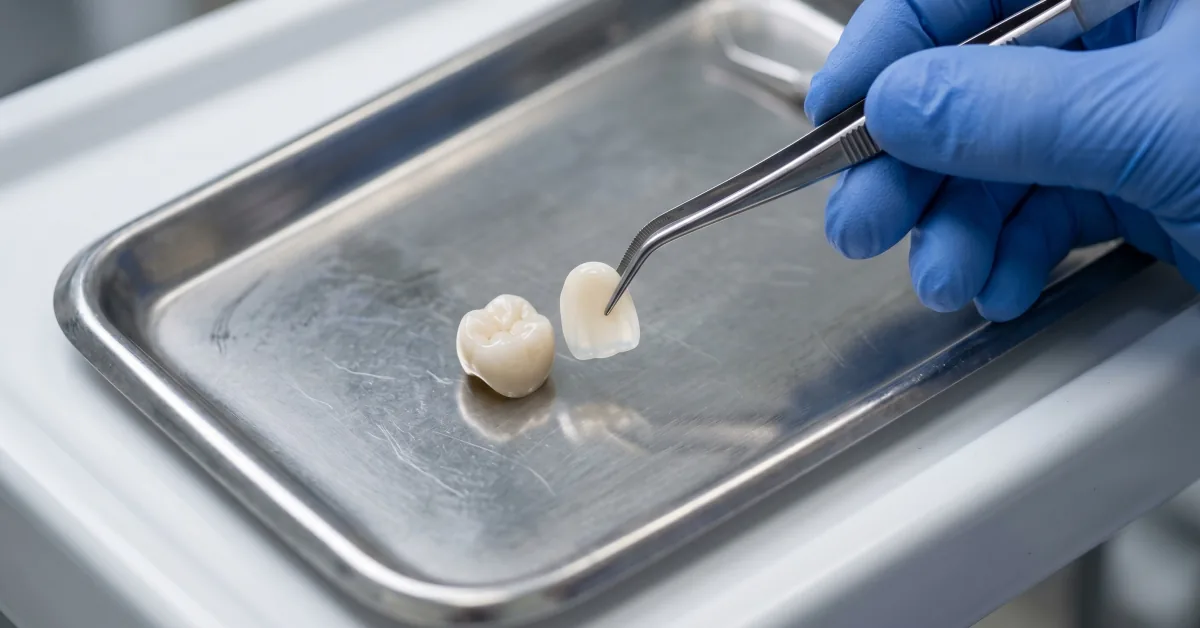
Did this article raise questions?
Talk directly with our team of specialists. First consultation with no obligation.
Book a consultation